Why Won't My Garage Door Open?
A garage door that will not open is one of the most frustrating household failures, and the cause is usually one of a small set — a broken spring, a dead remote battery, a tripped sensor, a locked door, or a failed opener gear. The checks below separate them in about two minutes, before anyone is called.
Hours: Mon–Fri 7:00 AM–10:00 PM ET · Sat 8:00 AM–10:00 PM ET · Sun 7:00 AM–9:00 PM ET
Call now for garage door repair
Describe the door and the symptoms, and the visit will confirm what the door needs before any work starts.
Call NowServing Worcester and Worcester County, Massachusetts.
In short
A garage door that will not open is most often caused by a broken spring, a snapped cable, a failed opener gear, a tripped safety sensor, or a simple lock or power problem. Disconnect the opener and lift the door by hand: if the door is heavy or will not lift, the problem is in the door; if it lifts easily, the problem is in the opener or its controls.
The five checks to make first
First, check the power: is the opener plugged in, is the outlet live, and has a breaker tripped? A power outage, a tripped GFCI outlet, or a plug knocked loose by a stored box are all common. Second, check the manual lock: many garage doors have a slide bolt or a handle lock on the inside, and a locked door will not open no matter what the opener does. Third, check the emergency release: if the red cord has been pulled, the opener is disconnected from the door, and the door will not move until the trolley is re-engaged. Fourth, check the remote battery: a weak battery is the most common remote failure, and the test is the wall button — if the wall button opens the door and the remote does not, the remote is the problem. Fifth, look at the springs and cables: a torsion spring with a gap in its coils is broken, and a cable hanging loose beside the track is snapped. Either sight means the door will not open until the part is replaced.
The door or the opener? The hand test
The hand test settles the question in thirty seconds. Pull the emergency release cord to disconnect the opener, then lift the door by hand. If the door lifts smoothly, holds at waist height, and lowers gently, the door and its springs are sound and the problem is in the opener. If the door is heavy, sticks, or falls when released, the problem is in the door — usually a spring or a cable — and no opener repair will fix it. This test matters because the symptom is identical either way: the door does not move. Many openers have been replaced for a door problem, and many doors have been taken apart for an opener problem, and the hand test prevents both. The sound the opener makes is the second clue: a motor that hums without moving the door is trying to lift a door it cannot move, which points at the door or a stripped drive gear.
Cold weather and the frozen door
Worcester winters add a cause that has nothing to do with parts: a door frozen to the floor. Meltwater runs under the bottom seal during the day, freezes overnight, and glues the door to the concrete. In the morning the opener strains, the force limit trips, and the door does not move — or moves a few inches and stops. The fix is not force: running the opener against a frozen door can tear the bottom seal, strip the drive gear, or bend the bottom panel. The fix is to break the ice seal gently — a plastic scraper along the bottom edge, or warm water poured along the seal — and to clear the ice from the tracks before trying the opener again. Prevention is a bottom seal in good shape, a garage floor clear of standing water, and a thin application of proper lubricant on the seal in late autumn.
What not to do when the door will not open
Do not pull the emergency release and try to lift the door by hand if a spring may be broken — the door's full weight is more than it looks, and it can drop once it starts moving. Do not keep pressing the remote or the wall button, because each attempt strains the opener's motor and drive gear. Do not try to force the door with a pry bar or a jack — a bent track or a torn panel is a bigger repair than the one the household started with. And do not turn the opener's force setting up to push past the problem: a door that needs more force is a door with a problem, and masking it wears out the opener and defeats the safety reverse. The right response is the five checks, then the hand test, then the call — with notes on what happened and when, because the sequence points at the failed part.
The opener's force limit: what it is protecting
The opener's force limit is the setting that decides how hard the opener pushes before it gives up, and it is protecting the household, not inconveniencing it. When the door meets an obstruction — a bike, a box, a person — the force limit trips and the door reverses, instead of pushing through. When the door is binding in its tracks, or frozen to the floor, or heavy because a spring has broken, the force limit trips for the same reason: the opener is meeting more resistance than it should, and pushing harder would damage the door, the opener, or both. Turning the force setting up to make a stuck door move defeats that protection, and it is the most common mistake in garage door troubleshooting. A door that needs more force is a door with a problem — a binding track, a weakening spring, a frozen seal — and the repair is to find the problem, not to overpower it. The force setting should be the minimum that moves a balanced door reliably, and it should be reset whenever the door is repaired, because a new spring or a new track changes what the door needs. The force limit is not a fault to be worked around; it is the opener telling the household that something is wrong.
Related services and guides
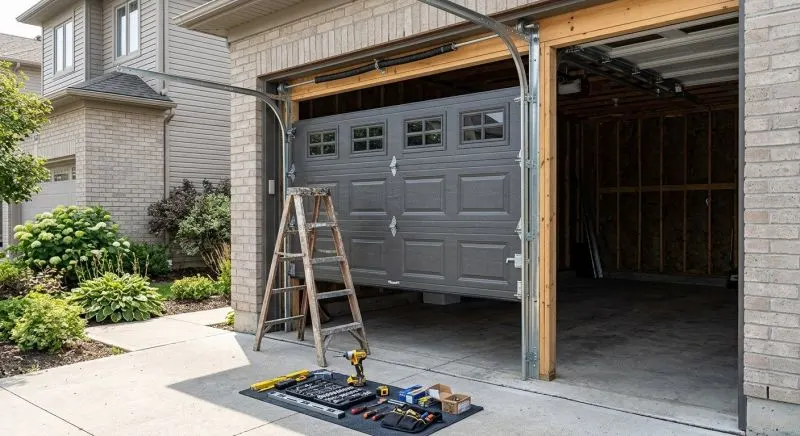
Garage Door Won't Open
Garage door won't open in Worcester, MA? Learn the checks that separate a door problem from an opener problem, and what
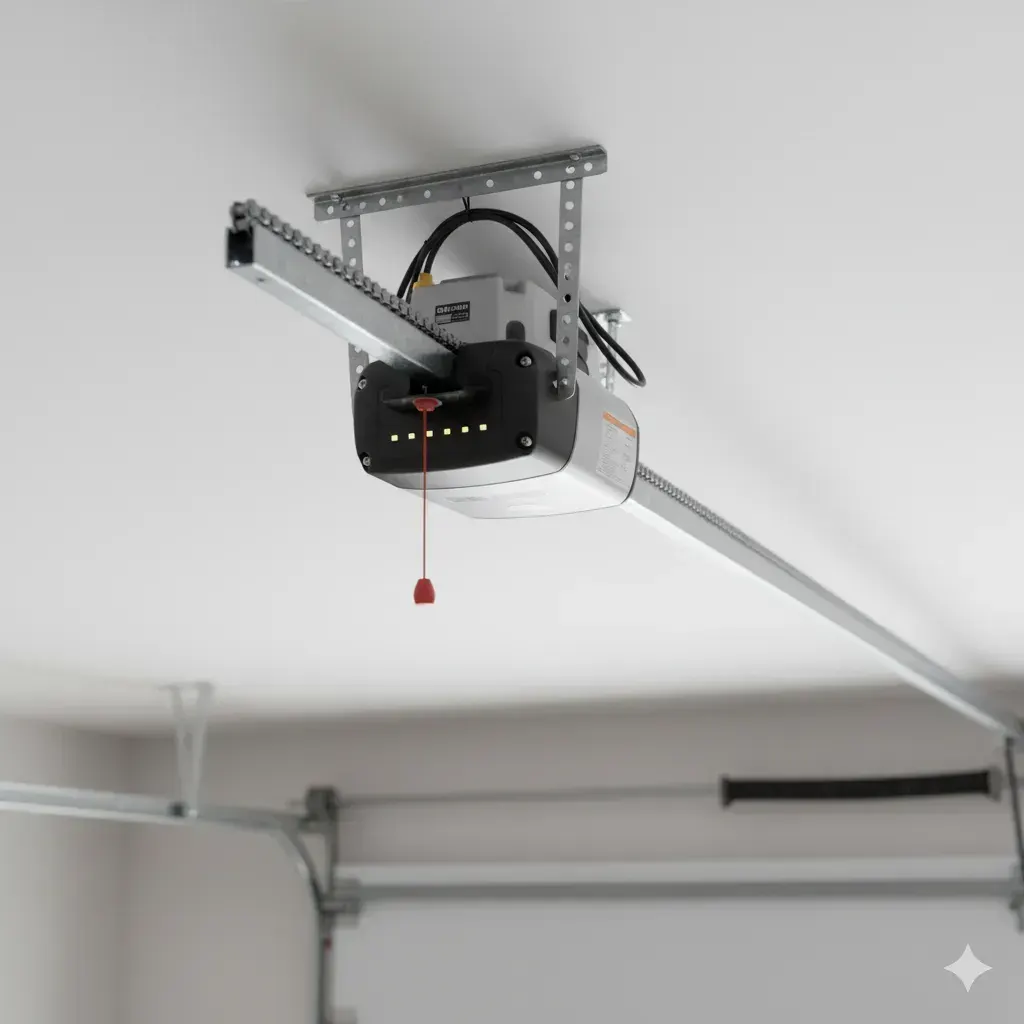
Emergency Garage Door Repair
Emergency garage door repair in Worcester, MA for doors that will not open, will not close, or are stuck open. Call now
Broken Garage Door Spring Repair
Broken garage door spring repair in Worcester, MA. Learn the signs of a snapped torsion or extension spring, why the doo
Garage Door Opener Repair
Garage door opener repair in Worcester, MA for openers that hum, click, reverse, or stop responding. Diagnosis at the mo
Garage Door Cable Replacement
Garage door cable replacement in Worcester, MA for snapped, frayed or slipped lift cables. The door is rebalanced and te
Frequently asked questions
The most common causes are a broken spring, a snapped cable, a stripped opener gear, a tripped safety sensor, or a simple power or lock problem. Check the power, the lock, the release, the remote battery, and look at the springs and cables before calling.
Yes, if the springs and cables are intact: pull the emergency release cord and lift the door by hand. If a spring is broken or a cable is loose, do not try — the door weighs its full weight and can drop.
Cold contracts the springs and cables, thickens lubricant, and can freeze the bottom seal to the floor. A part that was already worn often fails on the first hard freeze. Check the bottom seal for ice before concluding a part has broken.
The power to the opener, the manual slide-bolt lock, the emergency release cord, and the remote battery. Then look at the torsion spring above the door for a gap in its coils and at the cables for a loose or frayed one.
Call now for garage door repair in Worcester, MA
Describe the door and the symptoms, and the visit will confirm what the door needs before any work starts.
Call NowContact
Call to describe the door and the symptoms, and the visit will confirm what the door needs before any work starts. Hours: Monday to Friday 7:00 AM to 10:00 PM ET, Saturday 8:00 AM to 10:00 PM ET, Sunday 7:00 AM to 9:00 PM ET.
hello@worcestergaragedoorpros.com · Serving Worcester and Worcester County, Massachusetts.
Call Now