Garage Door Opener Repair in Worcester, MA
When the garage door opener stops working, the natural conclusion is that the opener is broken — but often it is not. A door that will not move can be a broken spring, a tripped safety sensor, a dead remote battery, or a stripped drive gear, and each one needs a different repair. This page explains how an opener is diagnosed properly, what actually fails inside one, and when repair makes sense.
Hours: Mon–Fri 7:00 AM–10:00 PM ET · Sat 8:00 AM–10:00 PM ET · Sun 7:00 AM–9:00 PM ET
Call now for garage door repair
Describe the door and the symptoms, and the visit will confirm what the door needs before any work starts.
Call NowServing Worcester and Worcester County, Massachusetts.
In short
Garage door opener repair starts with separating an opener problem from a door problem: the door is tested by hand first, then the opener is checked at the motor, the drive gear, the circuit board, the safety sensors and the controls. The failed part is repaired or replaced, the force and travel limits are reset, and the door is run through full cycles with the safety reverse tested.
Is it the opener or the door?
The first test in any opener call takes thirty seconds and settles the most common confusion. Pull the emergency release cord to disconnect the opener, then lift the door by hand. If the door lifts smoothly, holds at waist height, and lowers gently, the door and its springs are sound and the problem is in the opener. If the door is heavy, sticks, or falls when released, the problem is in the door — usually a spring or a cable — and no opener repair will fix it. This test matters because the symptom is identical either way: the door does not move. Many openers have been replaced for a door problem, and many doors have been taken apart for an opener problem, and the hand test prevents both.
The second check is the sound the opener makes. A motor that hums without moving the door is trying to lift a door it cannot move, which points at the door or a stripped drive gear. A motor that clicks once and goes silent may have a failed capacitor or a tripped limit. An opener that runs but the door does not follow has a disconnected trolley or a stripped gear. An opener that does nothing at all — no light, no sound — may have lost power, a tripped breaker, or a failed circuit board. Each sound points somewhere different, and the diagnosis follows the sound rather than guessing. The visit that starts with the hand test and listens to the opener is the visit that fixes the right thing.
What fails inside a garage door opener
Four parts account for most opener failures, and they fail in different ways. The drive gear is the most common: on chain and belt openers the motor turns a nylon gear that drives the chain or belt, and the gear strips over time, especially when the opener has been working against a weakening spring. The symptom is a motor that runs and a door that stays put, sometimes with a grinding sound. The circuit board is next: it carries the logic, the radio receiver and the safety sensor inputs, and it fails from power surges, moisture, or age. The symptom is an opener that behaves erratically — working sometimes, not others, or responding to the wall button but not the remote.
The motor capacitor is the third: it gives the motor its starting torque, and when it fails the motor hums but cannot start turning. The fourth is the travel and force system — the limit switches or the electronic limits that tell the opener where the door stops. When they drift, the door stops short, reverses for no reason, or drives into the floor. The sensors, the remote and the wall button are the remaining suspects: a safety sensor knocked out of alignment, a remote with a dead battery or a lost code, a wall button with a broken wire. A proper diagnosis checks each of these in order, from the simplest to the most involved, because the failed part is often the small one.
Chain, belt and screw drive: what the repair differs by
Worcester garages hold all three opener types, and the repair differs by drive. Chain-drive openers are the oldest and the most common in the city's older garages: a metal chain runs along a rail, driven by the motor gear. They are reliable and strong, but the chain stretches, the gear strips, and the whole assembly is noisy. The repair is usually a gear kit, a chain adjustment, or a rail realignment — and the noise is a feature of the type, not a fault to be fixed. Belt-drive openers replace the chain with a rubber belt: quieter, smoother, and the usual choice for a garage under a bedroom. The belt itself rarely fails, but the gear still strips and the belt can slip if the tension is wrong.
Screw-drive openers are the third type: a threaded steel rod turns and moves the trolley along it. They have fewer moving parts, which makes them reliable, but the screw needs lubrication and the coupler between the motor and the screw wears out. A screw-drive opener that groans and moves slowly usually needs lubrication and a coupler, not a new opener. The age of the opener matters for all three types: an opener over fifteen years old may use parts that are no longer made, and an opener from before 1993 has no photoelectric safety sensors at all. In that case the honest answer is a replacement opener with modern safety features, not a repair that keeps an unsafe opener running.
Safety sensors: the small part that stops the most doors
The photoelectric safety sensors are the small boxes mounted near the floor on either side of the door, one sending an invisible beam and the other receiving it. Since 1993 they have been required on residential openers, and they are the most common reason a door refuses to close. If the beam is broken — by a box, a bike, a spider web, or a sensor knocked out of alignment — the opener will not close the door, or it will close partway and reverse. The symptom is a door that opens fine but will not close, or a wall button that works only when held down.
The check is simple and worth doing before the visit. Look at both sensors: each should show a steady indicator light. A blinking or dark light means the sensor is misaligned, dirty, or has a loose wire. Wipe the lenses, check that both sensors point at each other, and make sure nothing is blocking the beam. Sunlight can also confuse a sensor — a low winter sun shining directly into the receiving sensor can make the opener think the beam is broken, and the fix is a small shade over the sensor, not a new opener. If the lights are steady and the door still will not close, the problem is elsewhere: the wiring, the circuit board, or the travel limits. But the sensors are the first check, because they are the simplest fix and the most common cause.
Remote, keypad and wall button problems
When the wall button works but the remote does not, the problem is in the remote or the radio, not the opener. The battery is the first check — a weak battery is the most common remote failure, and it is also the one that looks like a broken opener because the remote works sometimes and not others. The second check is range: a remote that works from the driveway but not from the street may have a weak battery or interference from a nearby device. The third is the code: a remote that has lost its pairing with the opener needs to be reprogrammed, which is a matter of pressing the learn button on the opener and the remote in the right order.
Keypads fail differently. A keypad that does not respond usually has dead batteries or worn buttons; a keypad that accepts the code but the door does not move may have a code that was cleared from the opener's memory, which happens after a power outage on some models. The wall button is the simplest control of all: if it does not work, the wire between the button and the opener may be broken or loose, often where it passes through the wall or along the ceiling. A proper opener visit tests all three controls — wall button, remote and keypad — because a household that can only open the door from inside the garage has a problem even if the opener itself is sound.
When an opener should be repaired, and when it should be replaced
Repair makes sense when the opener is otherwise sound and the failed part is a known wear item: a stripped gear, a failed capacitor, a sensor, a remote. Those are repairs that restore the opener to normal function, and the opener has years left in it. Repair also makes sense when the door is the real problem and the opener was never broken — the opener just needs to be reconnected and its limits reset once the door is fixed.
Replacement is the right answer in three situations. The first is an opener made before 1993, which has no photoelectric safety sensors: no repair makes it safe by modern standards, and it should be replaced with an opener that has them. The second is an opener whose circuit board has failed and whose parts are no longer made — common on openers over fifteen years old. The third is an opener that has failed more than once in a short period, or that has been straining against a weakening spring for years: the motor is tired, the gear is worn, and the next failure is a matter of time. A replacement opener also brings quieter operation, a battery backup for power outages, and modern security rolling codes. The decision should be made on the opener's age, its safety features and its failure history — not on the age of the door, and not on a single symptom.
What the opener repair visit includes
A proper opener repair visit follows a sequence, and the sequence is what keeps the repair honest. First the door is tested by hand, to confirm the door and springs are sound. Then the opener is tested at each of its parts: power at the outlet, the motor, the drive gear, the circuit board, the sensors, the travel and force limits, and each control. The failed part is identified before it is replaced, so the household knows what is being fixed and why. The repair is then made — a gear kit, a capacitor, a sensor, a reprogramming — and the opener's travel limits are reset so the door opens fully and closes fully without driving into the floor.
The force setting is set to the minimum that moves the door reliably, because a force setting turned too high defeats the safety reverse. The safety reverse is then tested: the door should reverse when it meets an obstruction, and the sensors should stop the door when the beam is broken. The door is run through several full cycles, and the remote, keypad and wall button are each tested. The visit ends when the door moves smoothly from every control, closes fully, and reverses on contact — not when a single part has been swapped. If the diagnosis shows the opener should be replaced rather than repaired, the visit should say so plainly, with the reasons visible on the opener itself.
Opener problems that look like door problems
Several opener failures masquerade as door problems, and they are worth knowing because they change the repair entirely. A door that closes partway and reverses looks like a door off its tracks, but it is often a safety sensor out of alignment or a travel limit that has drifted. A door that will not close at all looks like a broken spring, but it is often a sensor with a blocked beam. A door that opens a few inches and stops looks like a cable problem, but it is often a force setting that is too low for a cold morning, when the lubricant is thick and the door is stiff.
The reverse confusion happens too: a door problem that looks like an opener problem. A broken spring makes the opener hum and strain, which looks like a failed motor. A bent track makes the door judder, which looks like a failing drive gear. A roller that has jumped its track makes the door stop halfway, which looks like a travel limit fault. The hand test — disconnect the opener and lift the door by hand — is the only reliable way to separate the two, and it is the first thing a proper visit does. Any diagnosis that starts with the opener without testing the door is a guess, and guesses are how households end up paying for the wrong repair.
Opener maintenance: the habits that keep it working
An opener that is maintained lasts longer than one that is ignored, and the maintenance is simple. A few times a year, test the safety reverse by placing an object in the door's path and confirming the door reverses on contact, and check that both safety sensors show a steady light. Lubricate the chain or the screw — a chain-drive opener needs its chain kept at the right tension and lightly lubricated, a screw-drive opener needs its screw lubricated, and a belt-drive opener needs its belt checked for wear and tension. Keep the opener's antenna hanging straight down, because a bent or tucked antenna shortens the remote's range. And replace the remote and keypad batteries before they go weak, because a weak battery is the most common remote failure and the one that looks most like a broken opener.
The habit that matters most is the door's balance. An opener that works against a balanced door lasts years longer than one that works against a heavy door, because the opener was never built to lift the door's weight — the springs do that. A door that feels heavier than it used to, or that drifts down when it should hold steady, is a door whose springs need attention, and the opener is the part that will pay for it first, in a stripped gear or a burned-out motor. The twice-yearly check — balance, lubrication, sensors, reverse, batteries — is the maintenance an opener needs, and it is the same check the door needs. A door and an opener maintained together last longer than either maintained alone.
Problem to solution
Problem
The first test in any opener call takes thirty seconds and settles the most common confusion. Pull the emergency release cord to disconnect the opener, then lift the door by hand. If the door lifts smoothly, holds at waist height, and lowers gently, the door a
Solution
Garage door opener repair starts with separating an opener problem from a door problem: the door is tested by hand first, then the opener is checked at the motor, the drive gear, the circuit board, the safety sensors and the controls. The failed part is repair
What happens on a garage door repair visit
Describe the door and the symptoms — what happened, when, and what the springs and cables look like.
The visit checks the whole door system and names the failed part before any work starts.
The failed part is repaired or replaced, matched to the door, and the door is rebalanced by hand.
Full open and close cycles, balance checked, safety reverse tested — the door proves it works.
Related services and guides
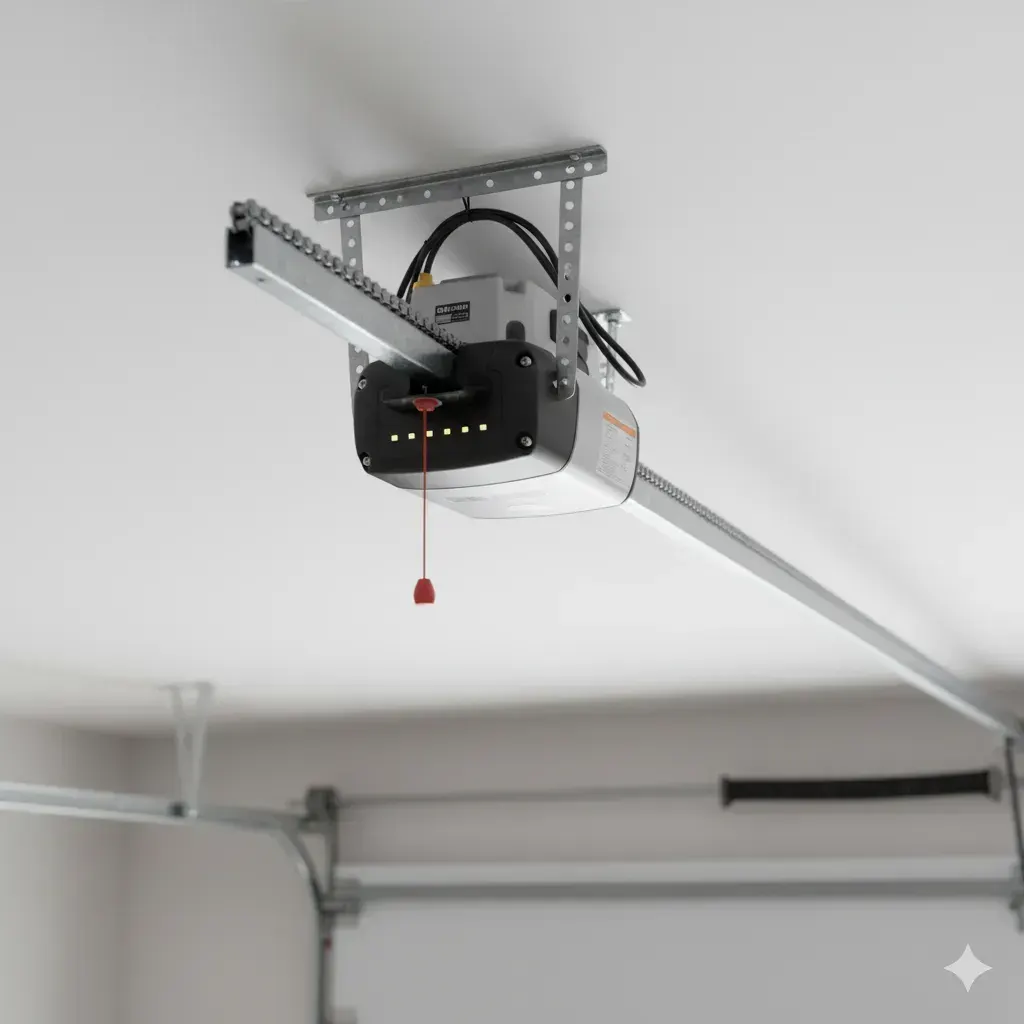
Emergency Garage Door Repair
Emergency garage door repair in Worcester, MA for doors that will not open, will not close, or are stuck open. Call now
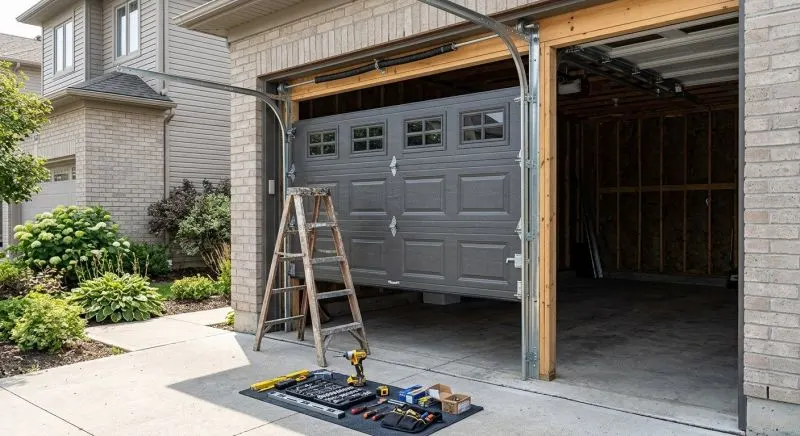
Garage Door Won't Open
Garage door won't open in Worcester, MA? Learn the checks that separate a door problem from an opener problem, and what
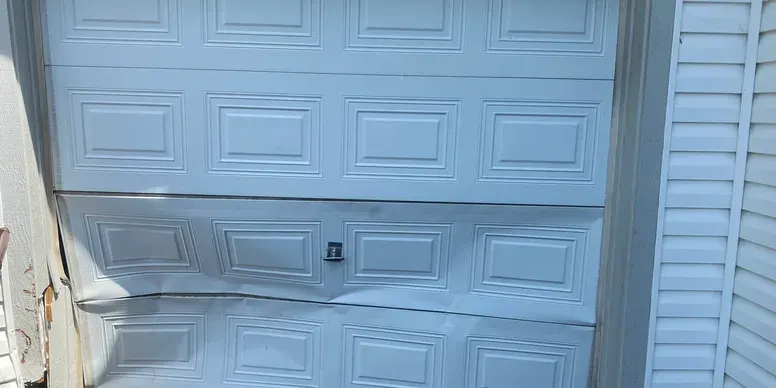
Garage Door Sensor Repair
Garage door sensor repair in Worcester, MA for safety sensors that stop the door from closing. Alignment, wiring and ope
Garage Door Keypad & Remote Repair
Garage door keypad and remote repair in Worcester, MA for remotes that stop working, keypads that will not respond, and
Garage Door Spring Replacement
Garage door spring replacement in Worcester, MA for torsion and extension springs. Matched springs, rebalancing, and ful
Frequently asked questions
Either the door is too heavy for the opener because a spring has broken, or the opener's drive gear has stripped. Disconnect the opener and lift the door by hand: if the door is heavy or will not lift, the problem is the spring. If the door lifts easily, the problem is inside the opener.
The safety sensors are the most common cause. Check that both sensors near the floor show a steady light, that the lenses are clean, and that nothing is blocking the beam between them. A sensor knocked out of alignment will stop the door from closing.
Repair makes sense when the opener is otherwise sound and the failed part is a wear item such as a gear, a capacitor or a sensor. Replacement is the right answer for an opener made before 1993 with no safety sensors, one whose parts are no longer made, or one that has failed repeatedly.
A weak battery is the most common cause, followed by interference and a remote that has lost its pairing with the opener. Replace the battery first, then check whether the wall button works — if it does, the opener is sound and the problem is the remote or its code.
They are the photoelectric eyes mounted near the floor on either side of the door. One sends an invisible beam and the other receives it, and if the beam is broken the opener will not close the door. They have been required on residential openers since 1993.
The opener is detecting an obstruction or a fault. The usual causes are a blocked or misaligned safety sensor, a travel limit that has drifted, or a door that is binding in its tracks. Check the sensors first, then call — the force setting should not be turned up to push past the problem.
Call now for garage door repair in Worcester, MA
Describe the door and the symptoms, and the visit will confirm what the door needs before any work starts.
Call NowContact
Call to describe the door and the symptoms, and the visit will confirm what the door needs before any work starts. Hours: Monday to Friday 7:00 AM to 10:00 PM ET, Saturday 8:00 AM to 10:00 PM ET, Sunday 7:00 AM to 9:00 PM ET.
hello@worcestergaragedoorpros.com · Serving Worcester and Worcester County, Massachusetts.
Call Now