Garage Door Installation in Worcester, MA
A new garage door is the largest moving part of a house and the most visible one from the street. Getting it right means the right size, the right insulation for a New England winter, the right springs for the door's weight, and an opener that is paired to the door rather than fighting it. This page explains how an installation is planned, what the visit includes, and what to look for in a new door.
Hours: Mon–Fri 7:00 AM–10:00 PM ET · Sat 8:00 AM–10:00 PM ET · Sun 7:00 AM–9:00 PM ET
Call now for garage door repair
Describe the door and the symptoms, and the visit will confirm what the door needs before any work starts.
Call NowServing Worcester and Worcester County, Massachusetts.
In short
Garage door installation means measuring the opening, removing the old door if there is one, fitting the new door's tracks, sections, springs and opener, then balancing the door by hand and testing the opener and safety reverse through full cycles. The door is sized to the opening, insulated for the climate, and matched to the household's use.
When a new garage door makes sense
A new door makes sense in three situations. The first is damage across the door: several dented, cracked or rusted sections, a bent track, or a top section cracked where the opener bracket pulls. Replacing sections one at a time on a door like that costs more than a new door and leaves the oldest parts still old. The second is a door that has become unreliable: springs replaced twice, cables frayed, rollers worn, opener straining — a door whose parts are failing in sequence is a door whose system is worn out, and a new door resets the clock on all of it at once. The third is a change in the household's needs: a garage converted to a workspace, a home office above the garage, or a door that needs to keep a New England winter out of a heated space.
The decision should be made on the door's condition, not its age alone. A twenty-year-old door that is straight, balanced and sound can keep working for years with maintenance. A ten-year-old door with rusted bottom sections, bent tracks and a cracked top section is a door that should be replaced. The visit that recommends a new door should be able to point at the reasons — the rust, the crack, the bend — and explain why a repair will not make the door reliable. And the household should expect the same honesty in reverse: a door that needs one section should get one section, not a sales pitch for a new door.
Sizing the door to the opening
Garage doors are not one-size-fits-all, and Worcester's older garages prove it. A standard single door is eight or nine feet wide and seven feet high, and a double door is sixteen feet wide, but the city's triple-deckers, carriage-house conversions and post-war garages hold doors of every other size — seven feet wide, eight feet high, fifteen feet wide, and openings that are not quite square because the framing has shifted with the house. The installation starts with measuring the opening itself: the width and height, the headroom above the opening, the side room on either side, and the depth of the garage. Those four measurements decide what door can be fitted and what spring system it needs.
The measurement also catches the problems that a catalogue cannot. An opening that is out of square, a header that has sagged, or a floor that slopes toward the garage will all affect how the door seals and moves, and they should be found before the door is ordered, not after it arrives. The track system is sized to the same measurements: low-headroom tracks for a garage with little space above the opening, standard tracks where there is room, and a spring system — torsion or extension — matched to the door's weight and the headroom available. A door that is sized to its opening, rather than forced into a standard size, is a door that seals, balances and lasts.
Insulation and the New England winter
Insulation is the feature that matters most in Worcester, and it is the one most often skipped. An uninsulated steel door is a sheet of cold metal between the garage and the winter, and it does very little to keep the garage — or the rooms above and beside it — warm. An insulated door, with polyurethane or polystyrene between steel skins, keeps the garage noticeably warmer, keeps the opener and the springs working in a narrower temperature range, and reduces the condensation that rusts springs, cables and tracks. For a garage with a room above it, or a garage used as a workspace, insulation is not a luxury; it is the difference between a usable room and a cold one.
The insulation rating is only part of the story. The weather seal around the door — the bottom seal, the side seals and the top seal — is what stops wind, snowmelt and rain from getting in, and a new door with old seals is a new door that leaks. The installation should include fresh seals, fitted to the door and the opening, so the door closes against a continuous seal on all four sides. The material matters too: steel is the standard, and it is strong, durable and available insulated; wood is heavier and needs more maintenance, but it suits older homes; aluminium and fibreglass are lighter and do not rust. The choice should follow the house, the climate and the household's use — not the catalogue photograph.
The opener and the new door, fitted as a pair
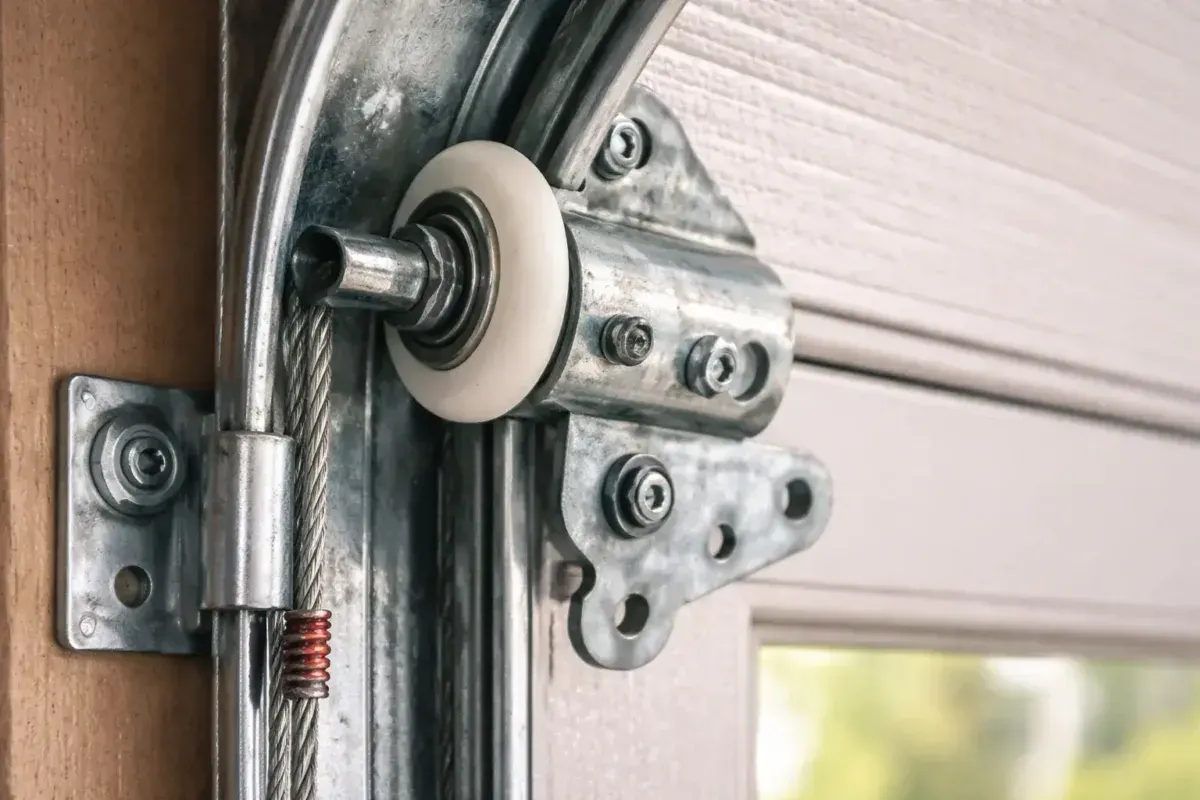
A new door is the right moment to look at the opener, because the two work as a pair and a new door on a tired opener is a new door that will not last as long as it should. An opener that spent years straining against a weakening spring on the old door will have a worn drive gear and a tired motor, and it will strain against the new door too. An opener made before 1993 has no photoelectric safety sensors, and no new door should be fitted to an opener that cannot stop for an obstruction. And an opener whose force setting was turned up to push a stiff old door will push the new door too hard, defeating the safety reverse.
The pairing should be decided on the door's weight and the household's needs. A belt-drive opener is the quiet choice for a garage under a bedroom; a chain-drive opener is the strong, simple choice for a heavy insulated double door; a screw-drive opener is the low-maintenance choice where it suits the door. A battery backup is worth considering in a city where winter storms take the power out, because a garage door that cannot open during an outage traps the car. The installation should end with the opener's travel and force limits set for the new door, the safety reverse tested, and the remote, keypad and wall button all working — the door and the opener tested as one system, not as two separate jobs.
What the installation visit includes
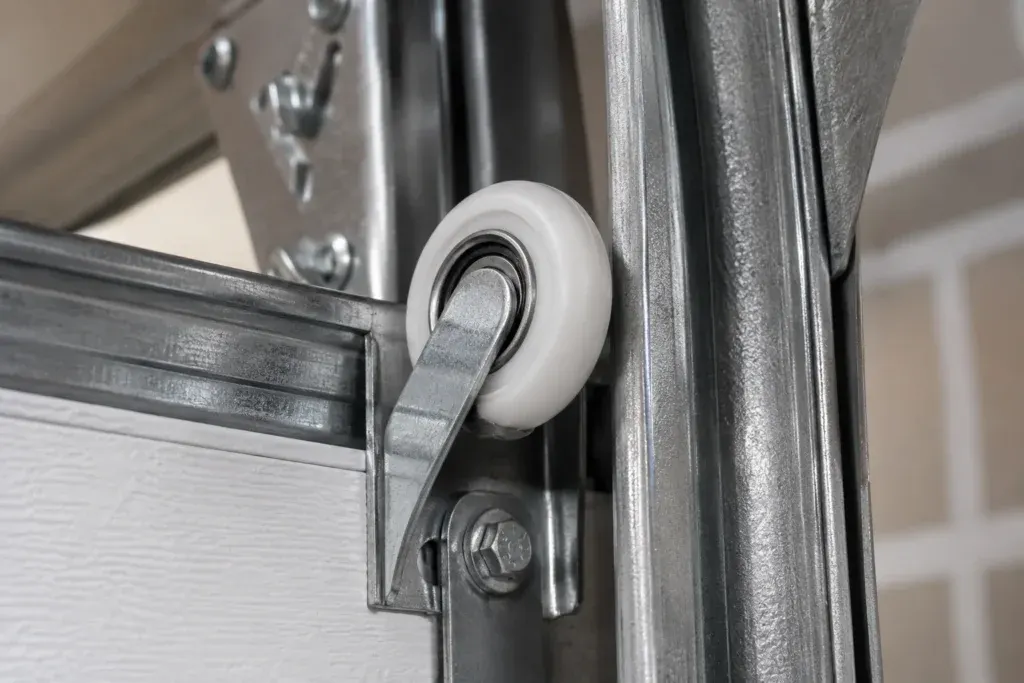
The installation starts with the old door, if there is one: the springs are unwound and removed safely, the sections are taken down, the tracks are removed, and the opening is cleared and inspected. The framing is checked for damage, rot or sag, because a new door fitted to damaged framing will not seal or balance. The new tracks are then fitted and levelled, the sections are installed from the bottom up, the hinges and rollers are fitted, and the spring system is installed and wound to the correct tension for the door's weight and height.
Then comes the balancing, which is the step that decides whether the door will last: the door is disconnected from the opener and lifted by hand to waist height, where it should stay put. If it drifts, the spring tension is adjusted until it holds. Only then is the opener fitted or reconnected, its travel and force limits set, and the door run through full cycles. The safety reverse is tested, the sensors are aligned and tested, and the weather seals are checked on all four sides. The visit ends with the household shown how the door works — the manual release, the wall button, the remote, the safety reverse — and with the door moving smoothly, closing fully, and staying where it is put. A new door is not installed when the last section is bolted in; it is installed when it is balanced, tested and shown to work.
Choosing a new garage door for a Worcester home
The choice starts with the house. A triple-decker or a pre-war single-family home in Worcester has an architectural character — the proportions, the trim, the windows — and a door that suits the house is one that looks like it belongs there. Raised-panel steel doors suit most homes; carriage-house style doors suit older homes and carriage-house conversions; doors with windows suit a garage that needs light. The colour should follow the house's trim and the neighbourhood, not the catalogue's brightest option. The material should follow the climate: insulated steel for most homes, wood where the house demands it and the household accepts the maintenance.
The practical questions matter as much as the look. How often is the door used each day? A household that opens the door eight times a day needs a higher-cycle spring than one that opens it twice. Is there a room above the garage? Then insulation and a quiet belt-drive opener matter. Is the garage used as a workspace? Then insulation and a tight seal matter more. Is the opening a non-standard size? Then the door must be made to measure, not forced into a standard size. The visit should ask these questions before recommending a door, because the right door is the one that fits the house, the climate and the household — and a door chosen on looks alone is a door that will disappoint on the first cold morning.
What a new door should do on its first winter
The first winter is the test of an installation, and a good one passes it quietly. The door should open and close smoothly on the coldest morning, because the springs are matched to the door's weight and the lubricant is rated for the cold. The bottom seal should keep meltwater out, so the door does not freeze to the floor. The opener should not strain, because the force setting is correct for a balanced door. The safety reverse should work, because the sensors are aligned and the force is set to the minimum that moves the door. And the garage should be noticeably warmer than it was with the old door, because the insulation and the seals are doing their job.
If the door struggles on the first cold morning, the cause is usually one of the installation steps: a spring wound to the wrong tension, a track that is not level, a seal that does not meet the floor, or an opener force setting that was left too high or too low. The household should call rather than force the door, because forcing a new door past a problem bends the tracks and wears the opener. A good installation includes a check after the first cold snap — or at least a household that knows what to look for: a door that moves evenly, closes fully, seals on all four sides, and reverses on contact. Those four things are the whole test, and a door that passes them will keep passing them for years.
Installation day: what the household should expect
Installation day starts with the old door, if there is one: the springs are unwound and removed safely, the sections are taken down, the tracks are removed, and the opening is cleared and inspected. The framing is checked for damage, rot or sag, because a new door fitted to damaged framing will not seal or balance. The household should expect some noise and some mess — the old door comes apart in sections, and the garage will be open to the weather for part of the day — and the visit should be planned for a day when the car can be parked outside and the garage can be cleared. Clearing the garage before the visit matters: the technician needs room to work at both sides of the door, at the opener, and at the tracks, and a cleared garage is a shorter visit.
The new door goes in from the bottom up: tracks fitted and levelled, sections installed, hinges and rollers fitted, spring system installed and wound to the correct tension for the door's weight and height. Then the balancing — the door lifted by hand to waist height, where it should stay put — and the opener fitted or reconnected, its travel and force limits set, and the door run through full cycles. The safety reverse is tested, the sensors are aligned and tested, and the weather seals are checked on all four sides. The visit ends with the household shown how the door works: the manual release, the wall button, the remote, the keypad, and the safety reverse. A new door is not installed when the last section is bolted in; it is installed when it is balanced, tested, and shown to work — and the household knows how to use it.
Problem to solution
Problem
A new door makes sense in three situations. The first is damage across the door: several dented, cracked or rusted sections, a bent track, or a top section cracked where the opener bracket pulls. Replacing sections one at a time on a door like that costs more
Solution
Garage door installation means measuring the opening, removing the old door if there is one, fitting the new door's tracks, sections, springs and opener, then balancing the door by hand and testing the opener and safety reverse through full cycles. The door is
What happens on a garage door repair visit
Describe the door and the symptoms — what happened, when, and what the springs and cables look like.
The visit checks the whole door system and names the failed part before any work starts.
The failed part is repaired or replaced, matched to the door, and the door is rebalanced by hand.
Full open and close cycles, balance checked, safety reverse tested — the door proves it works.
Related services and guides
Garage Door Panel Replacement
Garage door panel replacement in Worcester, MA for dented, cracked or rusted sections. One section or the full door — th
Garage Door Opener Repair
Garage door opener repair in Worcester, MA for openers that hum, click, reverse, or stop responding. Diagnosis at the mo
Garage Door Spring Replacement
Garage door spring replacement in Worcester, MA for torsion and extension springs. Matched springs, rebalancing, and ful
Commercial Garage Door Repair
Commercial garage door repair in Worcester, MA for warehouses, shops, loading docks and storefronts. Heavy-duty doors, h
Repair vs Replace a Garage Door
Repair vs replace a garage door in Worcester, MA. How the decision is made — the door's age, how many parts are failing,
Frequently asked questions
When several sections are damaged, when the top section is cracked where the opener bracket pulls, when the tracks are bent, or when the parts are failing in sequence — springs, cables, rollers and opener together. A door like that costs more to repair piece by piece than to replace, and the replacement resets the whole system.
By measuring the opening itself — width, height, headroom above, side room, and garage depth — because older garages often hold non-standard sizes and openings that are not quite square. The door is made to the opening, not forced into a standard size.
Yes, especially for a garage with a room above it or a garage used as a workspace. Insulation keeps the garage warmer, keeps the opener and springs working in a narrower temperature range, and reduces the condensation that rusts springs, cables and tracks.
It depends on the opener's age and condition. An opener made before 1993 has no safety sensors and should be replaced. An opener that strained against the old door's weakening springs will have a worn gear and should be checked. A sound, modern opener can stay — but its limits and force must be reset for the new door.
The springs are unwound and removed safely, the sections and tracks are taken down, and the opening is inspected before the new door is fitted. The framing is checked for damage or sag, because a new door fitted to damaged framing will not seal or balance.
A standard residential installation is usually a single visit once the door is made to the opening's measurements. The visit includes removing the old door, fitting the tracks, sections and springs, balancing the door by hand, setting the opener, and testing full cycles and the safety reverse.
Call now for garage door repair in Worcester, MA
Describe the door and the symptoms, and the visit will confirm what the door needs before any work starts.
Call NowContact
Call to describe the door and the symptoms, and the visit will confirm what the door needs before any work starts. Hours: Monday to Friday 7:00 AM to 10:00 PM ET, Saturday 8:00 AM to 10:00 PM ET, Sunday 7:00 AM to 9:00 PM ET.
hello@worcestergaragedoorpros.com · Serving Worcester and Worcester County, Massachusetts.
Call Now