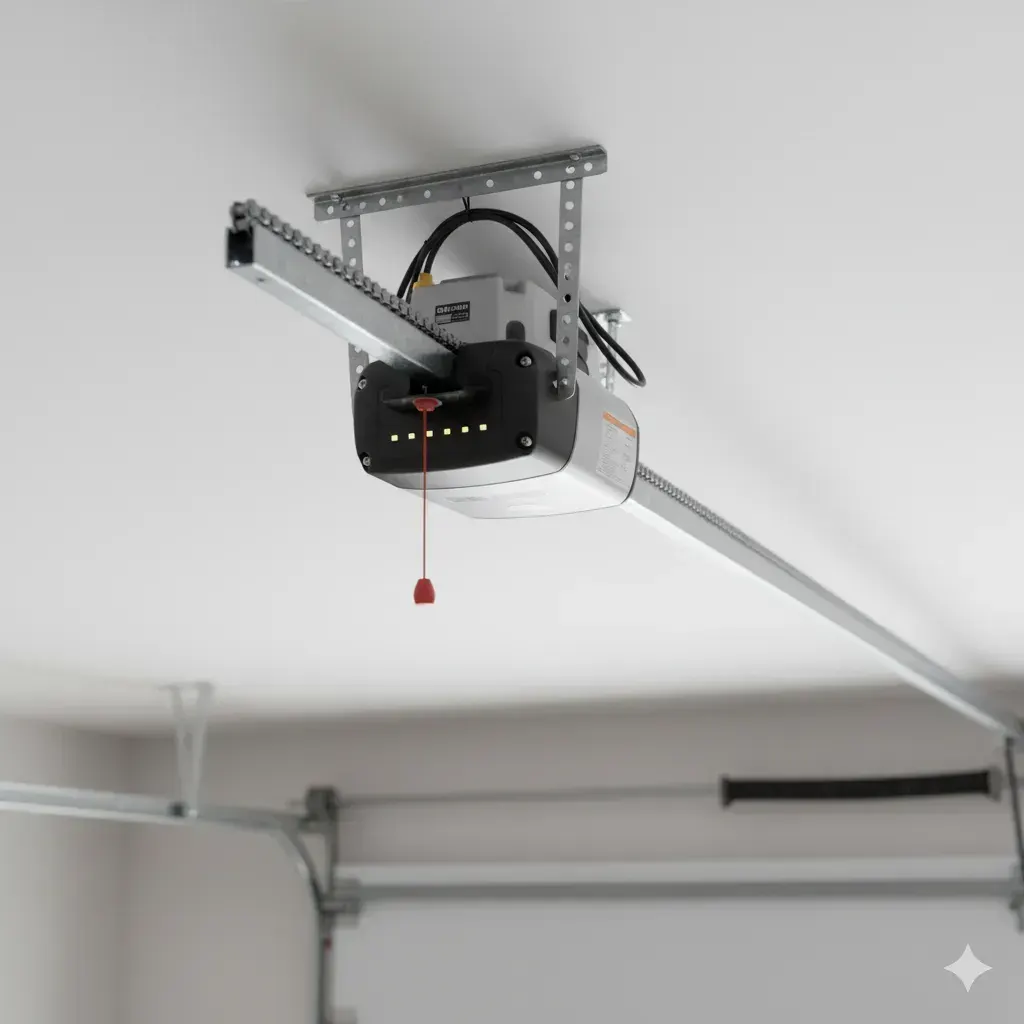
Emergency Garage Door Repair in Worcester, MA
A garage door that will not move is not a tomorrow problem. When the door is stuck open, stuck shut, hanging crooked or making a loud bang, the house is exposed, the car is trapped, and the day stops. This page explains what counts as an emergency, what a technician checks first, and what to do while you wait.
Hours: Mon–Fri 7:00 AM–10:00 PM ET · Sat 8:00 AM–10:00 PM ET · Sun 7:00 AM–9:00 PM ET
Call now for garage door repair
Describe the door and the symptoms, and the visit will confirm what the door needs before any work starts.
Call NowServing Worcester and Worcester County, Massachusetts.
In short
Emergency garage door repair covers the failures that leave a home unsecured or unusable: a broken spring, a snapped cable, a door off its tracks, an opener that has stopped responding, or a door that will not close. The visit starts with making the door safe and securing the opening, then diagnosing the failed part and repairing it so the door moves evenly and closes fully.
What counts as a garage door emergency
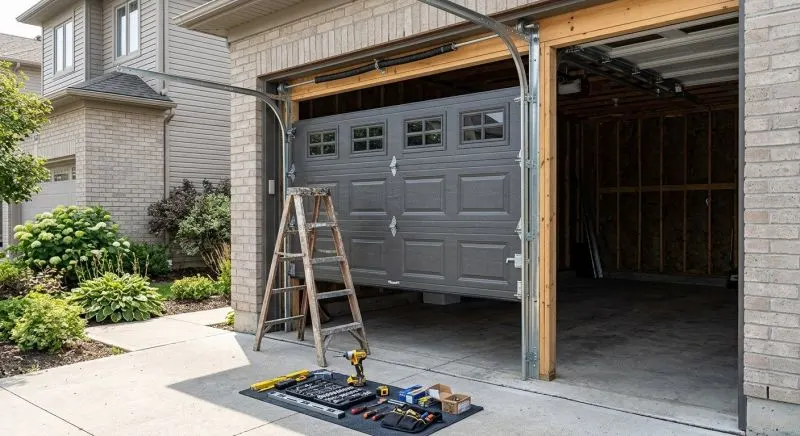
Not every garage door problem needs an urgent visit, but some do, and the difference matters. A door stuck open overnight is an emergency because the garage is open to weather, animals and anyone passing by, and because a door hanging on one spring or one cable can drop without warning. A door stuck shut with a car inside is an emergency when the household needs the car, and it is also a sign that something in the lifting system has failed rather than jammed. A loud bang followed by a door that will not lift is the classic broken-spring emergency: the spring did the lifting, and with it gone the door weighs its full weight, which on a double steel door is far more than one person should try to lift.
Other situations belong in the same category even when the door still moves. A door that closes partway and then reverses, a door that grinds and jerks on its way up, a cable hanging loose beside the track, or a door sitting visibly crooked in its frame are all signs that a part has failed or is about to. The door may still open today, but the next cycle can be the one where the cable lets go or the roller leaves the track. In Worcester winters the risk rises: cold contracts the metal in springs and cables, lubricant thickens, and a part that was already worn gets its hardest test on the coldest morning of the year. If the door behaves differently than it did last week, treat that change as information, not as a quirk to ignore.
What an emergency visit covers
An emergency visit has two jobs, in that order: make the situation safe, then fix the cause. The technician first looks at the door as a system — springs, cables, drums, tracks, rollers, hinges, opener and safety sensors — because a garage door fails as a system and the visible symptom is rarely the whole story. A door that will not open might have a broken spring, a stripped opener gear, a locked manual release, or a track bent just enough to bind the rollers. The inspection separates those possibilities before any part is touched, which is what keeps the repair from becoming a second visit.
Once the failed part is identified, the repair is the part the door actually needs, not a list of extras. A broken torsion spring is replaced as a matched pair when the door uses two, because the surviving spring has the same age and the same number of cycles behind it. A snapped cable is replaced and the door is rebalanced so both sides lift evenly. A failed opener is tested at the motor, the circuit board and the safety sensors before anyone concludes the opener itself is the problem. The door is then run through full open and close cycles, the balance is checked by hand, and the safety reverse is tested so the door stops and reverses on contact. The visit ends when the door moves smoothly, closes fully, and stays where it is put — not when a single part has been swapped.
Why a stuck door should not be forced
The most common mistake with a stuck garage door is trying to force it. Pulling harder on a door with a broken spring can bend the tracks, pull a roller out, or snap the remaining cable. Running the opener again and again against a door that will not move burns out the opener motor and strips the drive gear, turning a spring repair into a spring repair plus an opener repair. Pushing a crooked door back into line by hand risks the door dropping once the jammed roller clears the bend in the track.
The second mistake is standing under the door while someone else works the opener. A garage door is the heaviest moving object in most homes, and when a spring or cable fails, gravity is the only thing holding it. The safe position is to leave the door where it is, keep people and cars clear of its path, and disconnect the opener only if the manual release is reachable without reaching under the door. If the door is stuck open and the opening needs securing for the night, a sheet of plywood screwed across the inside of the frame is a better stopgap than a door propped on a ladder or a chair. The technician's first job on arrival is securing the opening, and a door that has been left alone is always easier to secure than one that has been forced.

The failures behind most emergency calls
Four failures account for most emergency garage door calls in Worcester, and they follow a pattern set by the city's housing and climate. Broken torsion springs lead the list: the spring does the heavy lifting, it cycles every time the door opens, and after years of daily use the steel fatigues and snaps, usually on a cold morning when the metal is contracted and the lubricant is thick. Snapped lift cables come next — the cables carry the door's weight on the drums, and once a cable frays or rusts, the door lifts unevenly and then jams. Opener failures follow, most often a stripped nylon drive gear or a failed circuit board, and they are easy to mistake for a door problem because the symptom is the same: the door does not move.
The fourth failure is the door leaving its tracks, which usually starts small: a roller wears, a track bracket loosens, a hinge cracks, and the door runs a little crooked for weeks before the roller finally jumps the track. Ice makes all four worse. A door frozen to the ground at the bottom seal will tear the seal or trip the opener's force limit when it is forced, and meltwater that refreezes inside the track can bind a roller solid. None of these failures is mysterious once the door is inspected as a system, but each one needs its own repair, which is why a visit that starts with diagnosis saves a second visit later.
How to tell whether the door is safe to leave
A door that is closed and staying closed is safe to leave until the visit. A door that is open, half-open, crooked or hanging on one side is not, and the question is what to do about it in the meantime. If the door is stuck open, the priority is the opening: the garage is an entry point to the house, and the door into the house from the garage should be locked. Valuables visible from the street should be moved out of sight, and if the garage has a side door, use that for access rather than ducking under the stuck door. If the door is stuck halfway, do not try to pull it down or push it up — a half-open door is the least stable position it can be in, and the weight is held by whatever part has not yet failed.
If the door is closed but will not open, the car stays inside and the household uses the front door. That is inconvenient, not dangerous, and it is the right call: the force needed to lift a door with a broken spring is enough to injure a back or a shoulder, and the door can drop once it passes the point where the remaining spring or cable can hold it. One useful check while waiting: look at the springs above the door and the cables at the sides. A torsion spring with a visible gap in its coils is broken. A cable hanging loose or wound unevenly on its drum is snapped or slipped. Either sight confirms the diagnosis and tells the technician what to bring, which shortens the visit.
Worcester winters and emergency garage door failures
Worcester winters are hard on garage doors, and the pattern repeats every year. The first hard freeze of the season produces a wave of broken springs, because steel contracts in the cold and a spring that was already near the end of its cycle life snaps under the extra load. The same freeze thickens the grease on the opener's drive screw and in the roller bearings, so the opener works harder and the door moves more slowly — and an opener that was already marginal gives up on the coldest morning. Snowmelt is the second problem: water runs under the bottom seal, freezes overnight, and glues the door to the floor. The opener's force limit trips, the door reverses, and the household concludes the opener is broken when the real problem is a sheet of ice.
The houses themselves add to the pattern. Worcester's triple-deckers and pre-war single-family homes often have garages built decades after the house, or original garages with doors that have been replaced piecemeal — a new opener on an old door, a new panel on old tracks. Mixed-age systems fail at their oldest part, and winter finds it. A door that gets a full inspection before the cold season — springs, cables, rollers, weather seal and opener force settings — is the one that keeps working through January. A door that has not been looked at in years is the one that fails on the morning the household needs the car most.
What to do while you wait for the visit
There are a few useful things to do before the technician arrives, and they all make the visit faster. First, clear the area around the door inside the garage: move boxes, bikes and tools at least a few feet back from the tracks on both sides, and clear a path from the garage door to the opener. The technician needs room to work at both sides of the door and at the opener, and a cleared garage is a shorter visit. Second, note what happened and when: the bang, the grind, the door stopping halfway, the remote working but the wall button not working — the sequence matters, because it points at the failed part. Third, check whether the opener's manual release has been pulled, and whether the door is locked from the inside with a slide bolt, because both are easy to overlook and both look like a broken opener.
What not to do matters more. Do not pull the emergency release cord and try to lift the door by hand when a spring may be broken — the door's full weight is more than it looks, and a door that starts down does not stop politely. Do not keep pressing the remote or the wall button hoping the opener will catch; each attempt strains the motor and the drive gear. Do not spray lubricant into the opener or onto the springs as a fix; lubricant helps maintained parts last longer, but it does not repair a snapped cable or a broken spring, and oil on the tracks makes the rollers slip. And do not let anyone stand under the door while it is being tested. The safest wait is a boring wait: door left alone, area clear, notes ready.
Repair or replace: how the decision is made
Most emergency calls end in a repair, not a replacement, because the door itself is usually sound and one part has failed. The decision turns on three questions: how old is the door, how many parts are failing at once, and whether the door is safe as a system. A door under fifteen years old with a single broken spring and sound panels, tracks and rollers is a repair — the spring is replaced, the door is rebalanced, and the door goes back to work. A door with a broken spring, frayed cables, bent tracks and rusted rollers is a different conversation: each part can be replaced, but the cost and the time add up, and the remaining old parts will fail next.
The third question is the one that matters most. A door with a cracked panel at the top section, where the opener bracket pulls, is a safety question, not a cosmetic one: the bracket can tear out of a weakened panel and the opener will pull the door apart. A door whose tracks are bent at the curve, or whose bottom section has rusted through at the seal, is a door that cannot be made reliable by replacing one part. In those cases the honest answer is a new door, and the visit should say so plainly, with the reasons visible on the door itself. What the visit should never do is replace a door because one spring broke, or replace a spring three times on a door whose tracks are bent. The diagnosis comes first, and the recommendation follows the door, not the other way round.
Common mistakes that turn a small repair into a big one
The first mistake is the DIY spring repair. Torsion springs store enough energy to cause serious injury, and the winding bars, the set screws and the tension are not forgiving of guesswork. Extension springs are less dangerous but still under tension, and a spring installed without the safety cable running through it can fly across the garage when it snaps. The second mistake is replacing only one spring on a two-spring door. The surviving spring has the same age and the same cycles, and it will break soon after — usually at the worst possible moment, and usually as a second emergency call.
The third mistake is ignoring the small signs. A door that squeaks, jerks, or takes a second longer to close is telling the household that a roller is worn, a hinge is cracked, or a cable is fraying. Those are cheap fixes when they are caught early and emergency calls when they are not. The fourth mistake is the wrong lubricant: household oil and silicone spray on the tracks attract dust and make rollers slip, while the parts that actually need lubrication — the spring coils, the hinges, the roller bearings — get nothing. The fifth is the opener force setting: turning it up to force a stiff door past a problem masks the problem and burns out the opener. A door that needs more force is a door that needs a repair, not a stronger opener.
How to choose a garage door professional in Worcester
The right question to ask is not how fast someone can arrive, but what the visit includes. A proper visit starts with an inspection of the whole door system, names the failed part, and explains the repair before the work starts. It ends with the door running through full cycles, the balance checked, and the safety reverse tested. Ask what is included in the visit and what happens if the diagnosis turns out to be different from the first guess — a professional has an answer for that, because diagnosis is the job. Ask whether the springs are replaced as a matched pair on a two-spring door, and whether the door is rebalanced after the repair, because those two steps are what separate a repair that lasts from a repair that repeats.
Local knowledge matters in Worcester in a specific way. The city's older garages are not standard: doors are often non-standard sizes, tracks are sometimes mounted to framing that has shifted with the house, and the mix of old door and new opener is common. A technician who has worked on triple-decker garages and pre-war carriage-house conversions will recognise the pattern on sight. The referral note matters too: this site connects callers with local garage door professionals rather than doing the work itself, so the call is the start of the process, and the visit is where the door gets its diagnosis. The most useful preparation for that call is the notes from the section above — what happened, when, and what the springs and cables look like.
Problem to solution
Problem
Not every garage door problem needs an urgent visit, but some do, and the difference matters. A door stuck open overnight is an emergency because the garage is open to weather, animals and anyone passing by, and because a door hanging on one spring or one cabl
Solution
Emergency garage door repair covers the failures that leave a home unsecured or unusable: a broken spring, a snapped cable, a door off its tracks, an opener that has stopped responding, or a door that will not close. The visit starts with making the door safe
What happens on a garage door repair visit
Describe the door and the symptoms — what happened, when, and what the springs and cables look like.
The visit checks the whole door system and names the failed part before any work starts.
The failed part is repaired or replaced, matched to the door, and the door is rebalanced by hand.
Full open and close cycles, balance checked, safety reverse tested — the door proves it works.
Related services and guides
Broken Garage Door Spring Repair
Broken garage door spring repair in Worcester, MA. Learn the signs of a snapped torsion or extension spring, why the doo
Garage Door Cable Replacement
Garage door cable replacement in Worcester, MA for snapped, frayed or slipped lift cables. The door is rebalanced and te
Garage Door Opener Repair
Garage door opener repair in Worcester, MA for openers that hum, click, reverse, or stop responding. Diagnosis at the mo
Garage Door Won't Open
Garage door won't open in Worcester, MA? Learn the checks that separate a door problem from an opener problem, and what
Garage Door Spring Replacement
Garage door spring replacement in Worcester, MA for torsion and extension springs. Matched springs, rebalancing, and ful
Frequently asked questions
Leave the door where it is and keep people clear of its path. If the door is stuck open, lock the door from the garage into the house and move valuables out of sight. Then call — the visit starts with making the door safe and securing the opening, then diagnosing the failed part.
Yes, in the practical sense: with the spring gone the door weighs its full weight and the opener cannot lift it safely, so the car is trapped or the garage is open. The spring is also the part most likely to fail on a cold Worcester morning, when the steel is contracted and the spring is near the end of its cycle life.
No. A broken cable means one side of the door is no longer supported, so the door lifts crooked and can jam or drop. Running the opener with a broken cable risks bending the tracks and damaging the opener. Leave the door alone and call for a visit.
Cold contracts the metal in springs and cables, thickens lubricant in the opener and roller bearings, and can freeze the bottom seal to the floor. A part that was already worn — a spring near the end of its cycles, a frayed cable, a tired opener gear — often fails on the first hard freeze of the season.
It depends on the failure. A spring or cable replacement on a standard residential door is usually a single visit once the failed part is identified. The visit includes the inspection, the repair, rebalancing the door, and testing the full open and close cycles plus the safety reverse.
Only if you are sure the springs and cables are intact. If a spring is broken or a cable is loose, the door weighs its full weight and can drop once it starts moving. Do not pull the emergency release and lift when a spring may be broken — leave the door where it is and call.
Call now for garage door repair in Worcester, MA
Describe the door and the symptoms, and the visit will confirm what the door needs before any work starts.
Call NowContact
Call to describe the door and the symptoms, and the visit will confirm what the door needs before any work starts. Hours: Monday to Friday 7:00 AM to 10:00 PM ET, Saturday 8:00 AM to 10:00 PM ET, Sunday 7:00 AM to 9:00 PM ET.
hello@worcestergaragedoorpros.com · Serving Worcester and Worcester County, Massachusetts.
Call Now