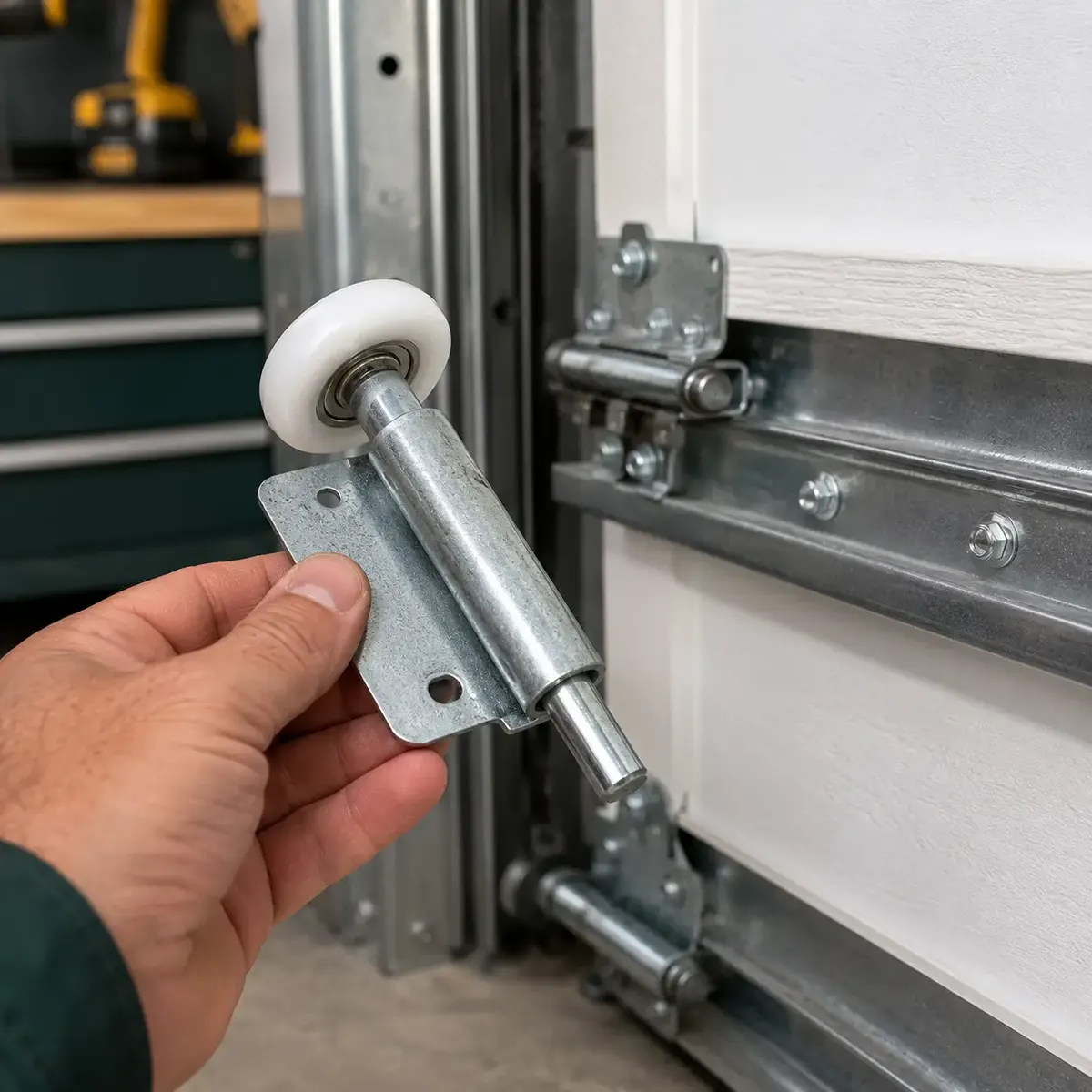
Commercial Garage Door Repair in Worcester, MA
A commercial garage door is not a bigger residential door — it is a different machine. It cycles dozens of times a day, carries heavier panels, runs on bigger springs and openers, and when it fails the business behind it stops: deliveries cannot get in, vehicles cannot get out, and a loading dock stands idle. This page explains how commercial doors differ, what fails on them, and what a repair visit includes.
Hours: Mon–Fri 7:00 AM–10:00 PM ET · Sat 8:00 AM–10:00 PM ET · Sun 7:00 AM–9:00 PM ET
Call now for garage door repair
Describe the door and the symptoms, and the visit will confirm what the door needs before any work starts.
Call NowServing Worcester and Worcester County, Massachusetts.
In short
Commercial garage door repair covers the heavy-duty doors on warehouses, shops, loading docks and storefronts: high-cycle springs, heavy cables and drums, commercial operators, rolling steel doors, sectional doors and dock equipment. The visit starts with making the opening safe and the business secure, then diagnosing the failed part and repairing the door as a system.
How commercial doors differ from residential doors
The difference starts with use. A residential door cycles a few times a day; a commercial door on a warehouse or a loading dock can cycle dozens of times a day, every working day. That changes everything about the door: the springs are rated for far more cycles, the cables and drums are heavier, the tracks are thicker steel, the panels are heavier gauge, and the operator is a commercial unit built for continuous duty rather than a residential opener built for a few cycles a day. The door is also bigger — wider, taller, and heavier — which means the forces involved are larger and the consequences of a failure are greater.
The types differ too. Sectional doors — panels that fold up on tracks, like a residential door — are common on shops and smaller warehouses. Rolling steel doors — a curtain of steel slats that winds onto a barrel above the opening — are common on storefronts, storage facilities and loading docks, because they need very little headroom and they secure the opening with a heavy curtain. High-speed doors, fire doors and dock doors are specialist types with their own requirements. A repair visit has to know which type it is looking at, because the parts, the tools and the safety steps are different for each — and a residential repair approach applied to a commercial door will not hold.
What fails on a commercial garage door
The failures follow the use. High-cycle springs wear out on schedule: a spring rated for 25,000 or 50,000 cycles will reach that rating in a few years on a busy dock, and it will snap — usually at the start of the working day, when the door is first opened. Cables and drums wear the same way, and on a heavy door a frayed cable is a bigger risk than on a residential door because the weight it carries is greater. Commercial operators fail at the motor, the gearbox and the control board, often from continuous duty and from power surges, and the symptom is a door that stops mid-travel or will not respond to the controls.
Rolling steel doors have their own failure pattern: the curtain can jam in its guides, a slat can bend or break, the barrel spring can lose tension, and the locking mechanism can seize. Sectional commercial doors suffer the same track, roller and hinge failures as residential doors, but at a larger scale — a bent track on a sixteen-foot commercial door is a bigger repair than on a residential door, and a roller that jumps the track on a heavy door can damage the panel it carries. The dock equipment around the door — dock levellers, seals and bumpers — also affects the door: a leveller that is out of adjustment can strike the door, and a seal that has failed lets in the weather that rusts the door's parts. A commercial visit inspects the door and its surroundings as a system, because the failure is often in the interaction between them.
When a commercial door fails, the business stops
The urgency of a commercial door repair is different from a residential one, because the door is part of the business's operation. A warehouse door that will not open means deliveries cannot get in and orders cannot get out. A loading dock door that is stuck open means the dock is unsecured and the building is losing heat. A storefront rolling door that will not close means the shop cannot be secured at the end of the day. A vehicle bay door that will not open means the fleet is trapped inside. In each case the cost of the failure is measured in the business's working day, not in inconvenience.
The visit has two jobs, in order: make the opening safe and secure, then fix the cause. Securing a commercial opening is a bigger job than a residential one — a sixteen-foot opening needs more than a sheet of plywood, and the visit should have a plan for it. The diagnosis follows the same logic as a residential visit — the door is tested as a system, the failed part is identified, and the repair is the part the door needs — but the parts are heavier, the springs store more energy, and the operator is a commercial unit with its own controls and safety systems. The visit ends when the door cycles reliably under load, the safety systems are tested, and the business can work again. A commercial door that is repaired properly is a door that will not stop the business a second time.
High-cycle springs and why they matter
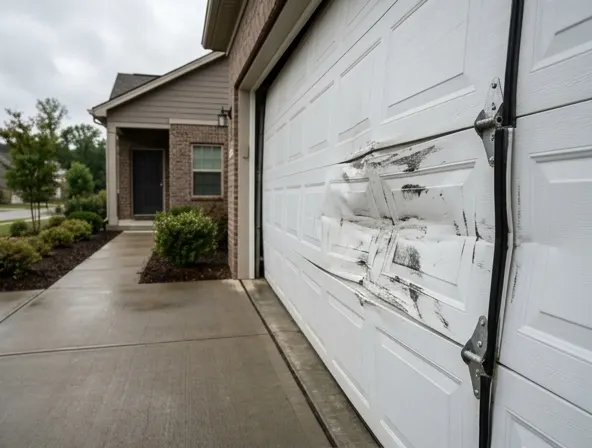
A commercial door's springs are rated by cycles, and the rating should follow the door's actual use. A door that cycles forty times a day reaches a 25,000-cycle spring in under two years, and a 50,000-cycle spring in under four. Fitting a residential-rated spring to a commercial door is a repair that will fail quickly, and it is a mistake that shows up as a second emergency call within months. The replacement spring must be matched to the door's weight, size and cycle count, and on a two-spring door both springs are replaced together, for the same reason as on a residential door: the surviving spring has the same age and the same cycles.
The visit should also check the drums, cables and bearings, because they share the spring's workload and wear at a similar rate on a commercial door. A cable that is frayed on a heavy door is a bigger risk than on a light one, and a drum that is worn will wind the new cable unevenly. The balance check after the replacement is the same test as on a residential door — the door should hold steady at waist height when lifted by hand — but on a commercial door the test is done with the operator disconnected and the door secured, because the weight involved is greater. A commercial spring replacement is a heavier, more careful version of the residential job, and the procedure matters more, not less, because the forces are larger.
Commercial operators: repair and replacement
Commercial operators are built for continuous duty, and they fail differently from residential openers. The motor and gearbox are the usual failure points: a gearbox that has lost its lubrication, a motor that has overheated from continuous use, or a control board that has failed from a power surge. The safety systems are also more involved: a commercial operator may have a sensing edge on the bottom of the door, photoelectric sensors, and a control system that integrates with the building's access control or fire alarm. A failure in any of those systems can stop the door, and the diagnosis has to check each one.
Repair makes sense when the operator is otherwise sound and the failed part is a wear item — a gearbox, a control board, a sensing edge. Replacement is the right answer when the operator is old enough that its parts are no longer made, when it lacks modern safety features, or when it has failed repeatedly. A replacement operator should be sized to the door's weight and cycle count, not to the old operator's rating, and its safety systems should be tested as part of the installation. The visit should also check the door itself, because an operator that has been straining against a weakening spring or a binding track will fail again — the operator is often the part that reports the door's problem, not the problem itself.
Rolling steel doors: the storefront and dock workhorse
Rolling steel doors are the most common commercial door in Worcester's storefronts, storage facilities and loading docks, and they work differently from sectional doors. A curtain of interlocking steel slats winds onto a barrel above the opening, guided by vertical guides on either side. They need very little headroom, they secure the opening with a heavy curtain, and they are operated by a chain hoist, a crank, or a commercial operator. The failures are specific to the type: a slat that bends or breaks, a curtain that jams in its guides, a barrel spring that loses tension, a locking mechanism that seizes, or guides that have been bent by a vehicle.
The repair starts with the curtain: a bent slat can sometimes be replaced on its own, but a curtain with several damaged slats or a barrel spring that has lost its tension needs a fuller repair. The guides are checked for bends and for the clearance the curtain needs to run freely — a guide that is too tight binds the curtain, and a guide that is too loose lets it rattle and wear. The barrel spring is the part that counterbalances the curtain, and like a torsion spring it stores energy and must be handled with the right tools and procedure. The locking mechanism is checked too, because a rolling door that cannot be locked cannot secure the premises. A rolling door that is repaired properly runs smoothly up and down, locks firmly, and seals at the bottom — and a rolling door that is forced past a jam will bend more slats, so the first response to a jammed rolling door is to stop, not to force it.
Planned maintenance for a commercial door
A commercial door that is maintained on a schedule fails less often and fails less expensively than one that is only repaired when it breaks. The schedule follows the door's use: a door that cycles dozens of times a day should be inspected quarterly, and a door that cycles a few times a day should be inspected twice a year. The inspection covers the same system as a residential visit — springs, cables, drums, tracks, rollers, hinges, operator and safety systems — but at a commercial scale, and with the door's cycle count in mind: a spring approaching its rated cycles should be replaced on a planned visit, not left to snap at the start of a working day.
The maintenance visit also checks the parts that a residential visit does not see: the dock leveller and seals around the door, the guides on a rolling door, the sensing edge on the bottom of the door, and the operator's control system. Lubrication, tightening, alignment and balance are the routine work, and the visit should report what is worn and what is approaching the end of its life, so the business can plan the replacement rather than suffer the emergency. A commercial door is a piece of the business's operation, and maintaining it on a schedule is cheaper than repairing it in an emergency — in parts, in downtime, and in the working day it does not interrupt.
Fire doors and high-speed doors: the specialist types
Not every commercial door is a sectional or rolling door, and two specialist types deserve their own note. Fire doors are built to close automatically in a fire, holding back flames and smoke long enough for people to get out and for the fire service to arrive. They are fitted with a fusible link or a release mechanism that drops the door when the temperature rises, and they are tested on a schedule — because a fire door that does not close is worse than no fire door at all, since the building is relying on it. The repair and testing of a fire door should follow the manufacturer's procedure and the building's fire safety plan, and the door should never be propped open, blocked, or modified without understanding what the modification does to its fire rating.
High-speed doors are the opposite specialist: they open and close in seconds, to keep conditioned air in and dust, insects and weather out, in food processing, pharmaceutical and cold-storage buildings. They run on a different mechanism — a flexible curtain on a high-speed operator — and they cycle far more often than a standard commercial door, so their parts wear on a faster schedule and their safety systems, including light curtains and sensing edges, are more involved. Both types need a technician who knows the type, because the parts, the tools and the safety steps are specific to it. A commercial visit that encounters a fire door or a high-speed door should recognise it, and the household or facility should expect the visit to say so plainly if the door needs a specialist rather than a general repair.
Problem to solution
Problem
The difference starts with use. A residential door cycles a few times a day; a commercial door on a warehouse or a loading dock can cycle dozens of times a day, every working day. That changes everything about the door: the springs are rated for far more cycle
Solution
Commercial garage door repair covers the heavy-duty doors on warehouses, shops, loading docks and storefronts: high-cycle springs, heavy cables and drums, commercial operators, rolling steel doors, sectional doors and dock equipment. The visit starts with maki
What happens on a garage door repair visit
Describe the door and the symptoms — what happened, when, and what the springs and cables look like.
The visit checks the whole door system and names the failed part before any work starts.
The failed part is repaired or replaced, matched to the door, and the door is rebalanced by hand.
Full open and close cycles, balance checked, safety reverse tested — the door proves it works.
Related services and guides
Garage Door Installation
Garage door installation in Worcester, MA for new and replacement doors. Sizing, insulation, opener pairing and full saf
Garage Door Spring Replacement
Garage door spring replacement in Worcester, MA for torsion and extension springs. Matched springs, rebalancing, and ful
Emergency Garage Door Repair
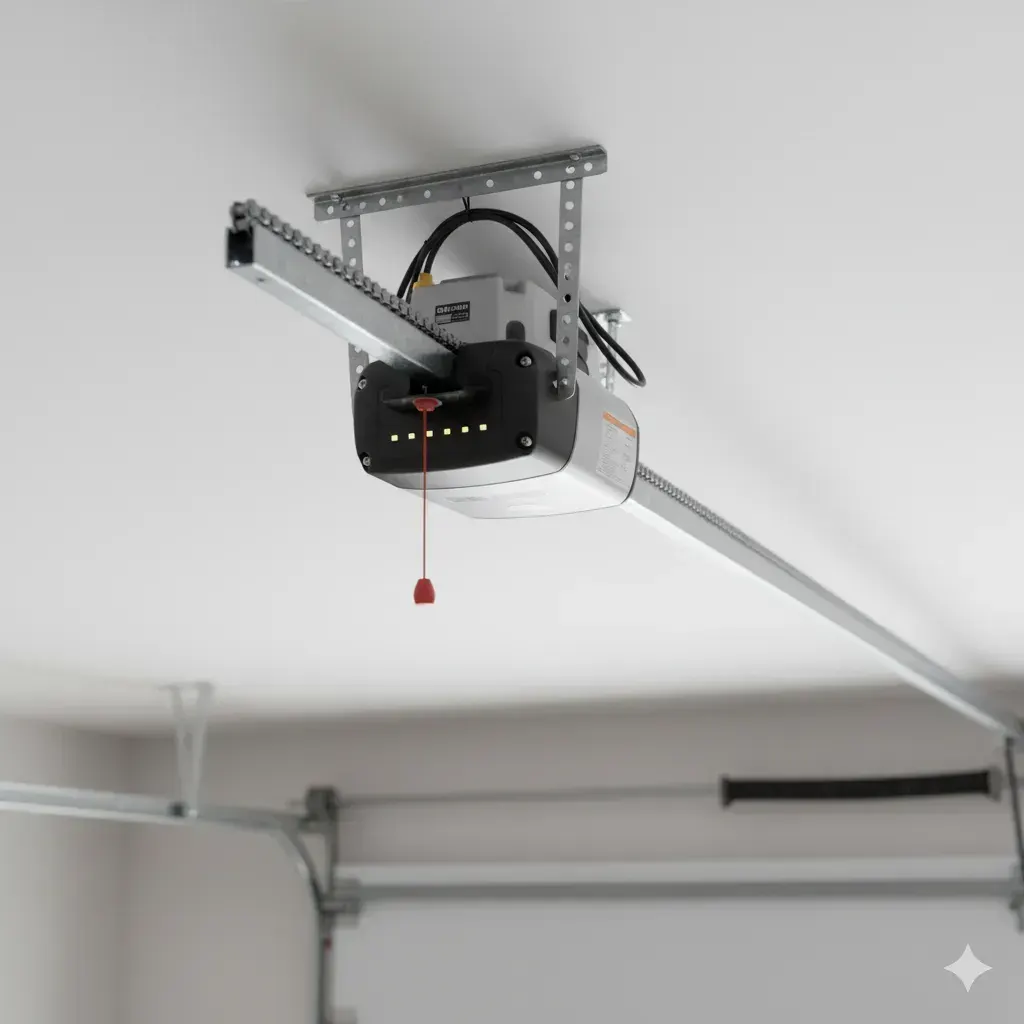
Emergency garage door repair in Worcester, MA for doors that will not open, will not close, or are stuck open. Call now
Garage Door Opener Repair
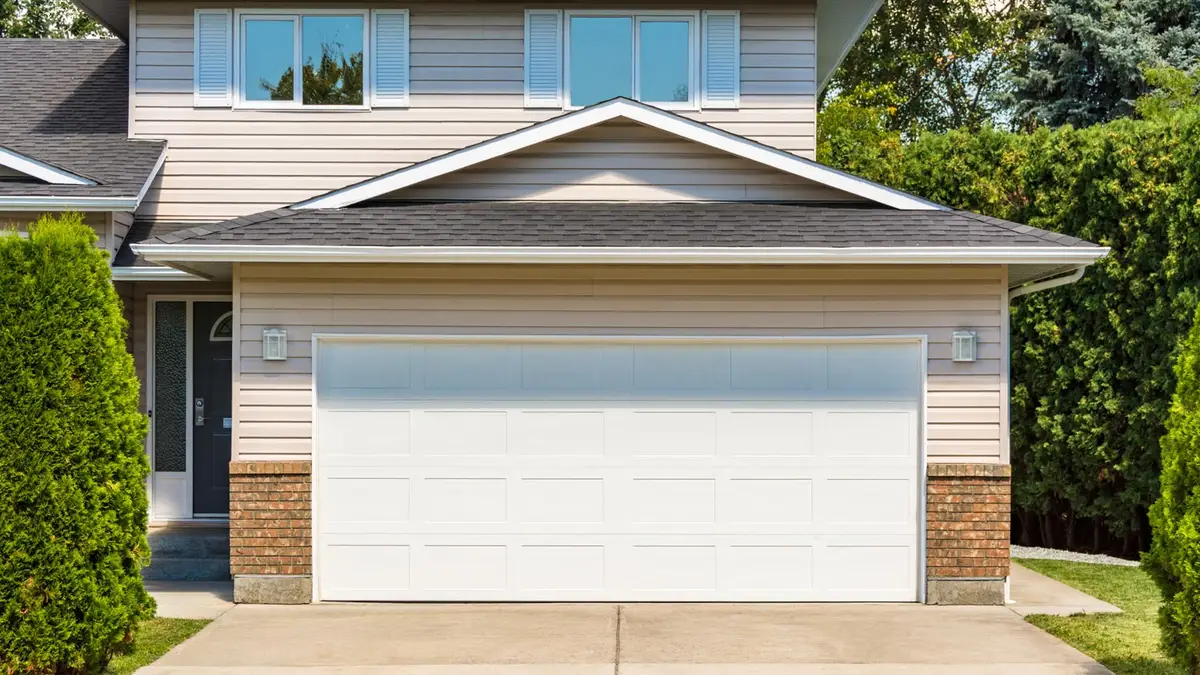
Garage door opener repair in Worcester, MA for openers that hum, click, reverse, or stop responding. Diagnosis at the mo
Warehouses & Storage
Garage door repair for warehouses and storage facilities in Worcester, MA. Loading dock doors, rolling steel doors, high
Frequently asked questions
Use and scale. A commercial door cycles dozens of times a day, carries heavier panels, runs on high-cycle springs and a commercial operator, and is bigger and heavier. The parts, the forces and the consequences of a failure are all larger, and the repair follows the door's type — sectional, rolling steel, high-speed or dock door.
It depends on use. A door that cycles dozens of times a day should be inspected quarterly, and a door that cycles a few times a day should be inspected twice a year. The inspection covers springs, cables, drums, tracks, rollers, the operator and the safety systems, with the spring's cycle count in mind.
High-cycle springs wear out on schedule. A door cycling forty times a day reaches a 25,000-cycle spring in under two years. The replacement must be matched to the door's weight, size and cycle count, and on a two-spring door both springs are replaced together.
It depends on the damage. A single bent slat can often be replaced on its own. A curtain with several damaged slats, a barrel spring that has lost tension, or guides that are bent usually needs a fuller repair. A rolling door that is jammed should not be forced — forcing it bends more slats.
Stop the door and keep people clear of its path. Do not run the operator again and do not try to lift the door by hand — a commercial door is heavy and its springs store a large amount of energy. Secure the opening if the door is stuck open, and call for a visit.
Yes. A commercial door needs a commercial operator built for continuous duty, sized to the door's weight and cycle count, with safety systems that suit the premises — a sensing edge, photoelectric sensors, and controls that can integrate with the building's access or fire systems.
Call now for garage door repair in Worcester, MA
Describe the door and the symptoms, and the visit will confirm what the door needs before any work starts.
Call NowContact
Call to describe the door and the symptoms, and the visit will confirm what the door needs before any work starts. Hours: Monday to Friday 7:00 AM to 10:00 PM ET, Saturday 8:00 AM to 10:00 PM ET, Sunday 7:00 AM to 9:00 PM ET.
hello@worcestergaragedoorpros.com · Serving Worcester and Worcester County, Massachusetts.
Call Now