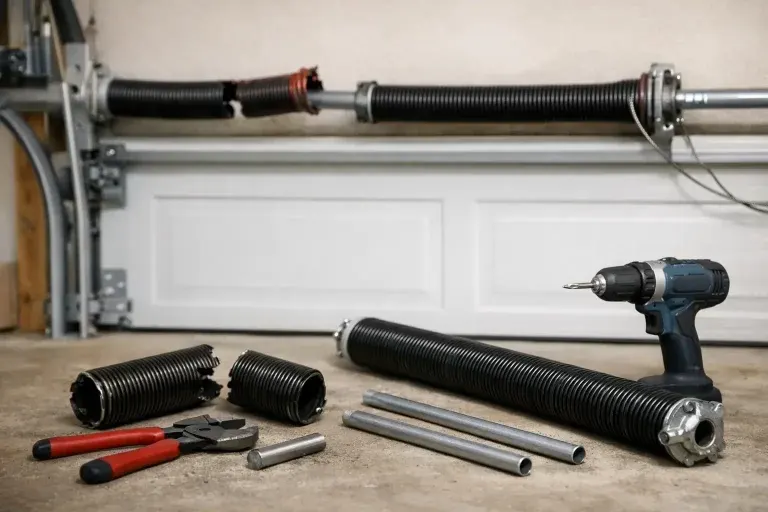
Garage Door Spring Broke — What To Do
A broken garage door spring usually announces itself with a loud bang from the garage, followed by a door that will not lift. It is the most common garage door emergency in Worcester, and the response in the first minutes matters: the right moves keep the household safe and the repair simple, and the wrong moves make it bigger.
Hours: Mon–Fri 7:00 AM–10:00 PM ET · Sat 8:00 AM–10:00 PM ET · Sun 7:00 AM–9:00 PM ET
Call now for garage door repair
Describe the door and the symptoms, and the visit will confirm what the door needs before any work starts.
Call NowServing Worcester and Worcester County, Massachusetts.
In short
When a garage door spring breaks, leave the door where it is, keep people clear of its path, and do not run the opener or try to lift the door by hand. If the door is stuck open, lock the door from the garage into the house. Then call — the visit replaces the springs as a matched pair, rebalances the door, and tests the opener and safety reverse.
What just happened in your garage
The bang was the torsion spring snapping: a coil of steel that has been wound and unwound thousands of times finally fatigued and separated, usually with a gap of about two inches in the coils where it broke. The spring was doing the heavy lifting — it counterbalanced the door's weight so the opener and a person could move it — and with it gone, the door weighs its full weight. That is why the opener hums and strains without moving the door, and why the door lifts a few inches and stops, or will not lift at all. The spring most often snaps when the door is at rest and the metal is cold, which is why the bang so often comes on the first hard freeze of the season, or in the middle of the night.
What to do right now
Leave the door where it is and keep people clear of its path. If the door is stuck open, lock the door from the garage into the house and move valuables out of sight. If the door is stuck shut with the car inside, the car stays inside — use the front door. Do not pull the emergency release cord and try to lift the door by hand: the door's full weight is more than it looks, and it can drop once it starts moving. Do not keep pressing the remote or the wall button: each attempt strains the opener's motor and drive gear, turning a spring repair into a spring repair plus an opener repair. Do not try to prop the door up or wedge it in place. Then look at the spring, from a safe distance: a gap in the coils above the door confirms the diagnosis, and a cable hanging loose beside the track tells the technician the cables need attention too. Note what happened and when — the bang, the time, whether the door moved at all — because the sequence points at the failed part.
How the repair visit works
The visit starts with the door secured — clamped in its tracks so it cannot move while the tension is released. The technician confirms which spring system the door uses, measures the door's weight and size, and identifies the spring by wire size, inside diameter and length, because the replacement must match the door. The old spring is unwound with winding bars in controlled quarter-turns and removed, and the new spring is fitted and wound to the correct number of turns for the door's height. On a two-spring door both springs are replaced together, because the surviving spring has the same age and cycles and will break soon after. The door is then balanced by hand — it should hold steady at waist height — the opener is reconnected and run through full cycles, and the safety reverse is tested. The cables, drums and bearings are checked at the same time, because they share the spring's workload.
Why both springs, and what else gets checked
Replacing both springs on a two-spring door is not an extra — it is the repair done once instead of twice. The surviving spring has the same number of cycles, the same rust exposure and the same age as the one that broke, and it will break soon after, usually as a second emergency call. The visit also checks the parts that work with the springs: the lift cables, which carry the door's weight and fray at a similar rate; the drums and bearings on the spring shaft; the rollers and hinges, which wear faster on a door that has been running heavy; and the opener, which has been straining against a weakening spring and may have a worn drive gear. A spring repair that checks the system and reports honestly what it finds is the visit that keeps the door working for years rather than months.
After the repair: the checks that confirm it worked
The repair is not complete when the new spring is fitted — it is complete when the door proves it works. The first check is the balance: disconnect the opener, lift the door to waist height, and let go. A balanced door stays put; a door that drifts up is over-sprung and a door that drifts down is under-sprung. The second check is the movement: the door should lift with moderate effort, move smoothly through its full travel without jerking or catching, and lower gently without slamming. The third check is the opener: reconnect it and run the door through several full cycles from the wall button, the remote and the keypad, and listen for grinding, squeaking or rattling that was not there before. The fourth check is the safety reverse: place an object in the door's path and confirm the door reverses on contact, and break the sensor beam while the door is closing and confirm it stops. The fifth check is the cables and the tracks: the cables should wind evenly onto their drums with no overlaps, and the door should sit square in its frame when closed, with no gap on one side. A visit that runs these checks and shows the household the results is a visit that has finished the job — and a household that knows the checks can repeat them a few weeks later, to confirm the balance has held and the new spring has settled in.
Related services and guides
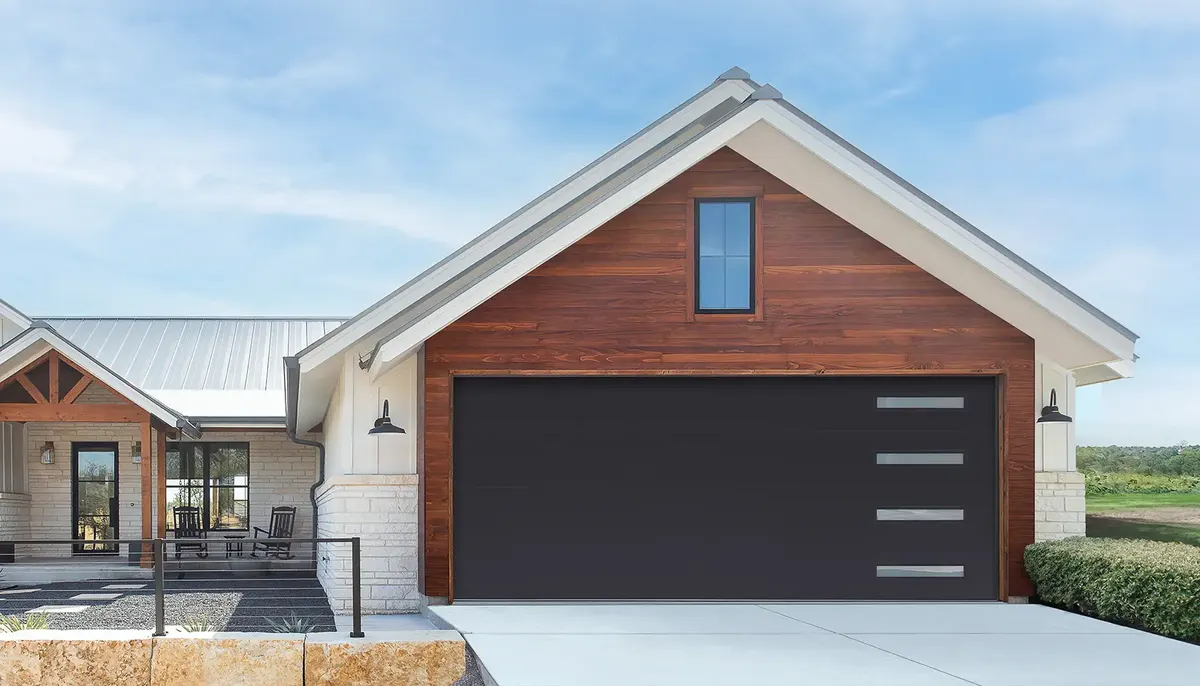
Broken Garage Door Spring Repair
Broken garage door spring repair in Worcester, MA. Learn the signs of a snapped torsion or extension spring, why the doo
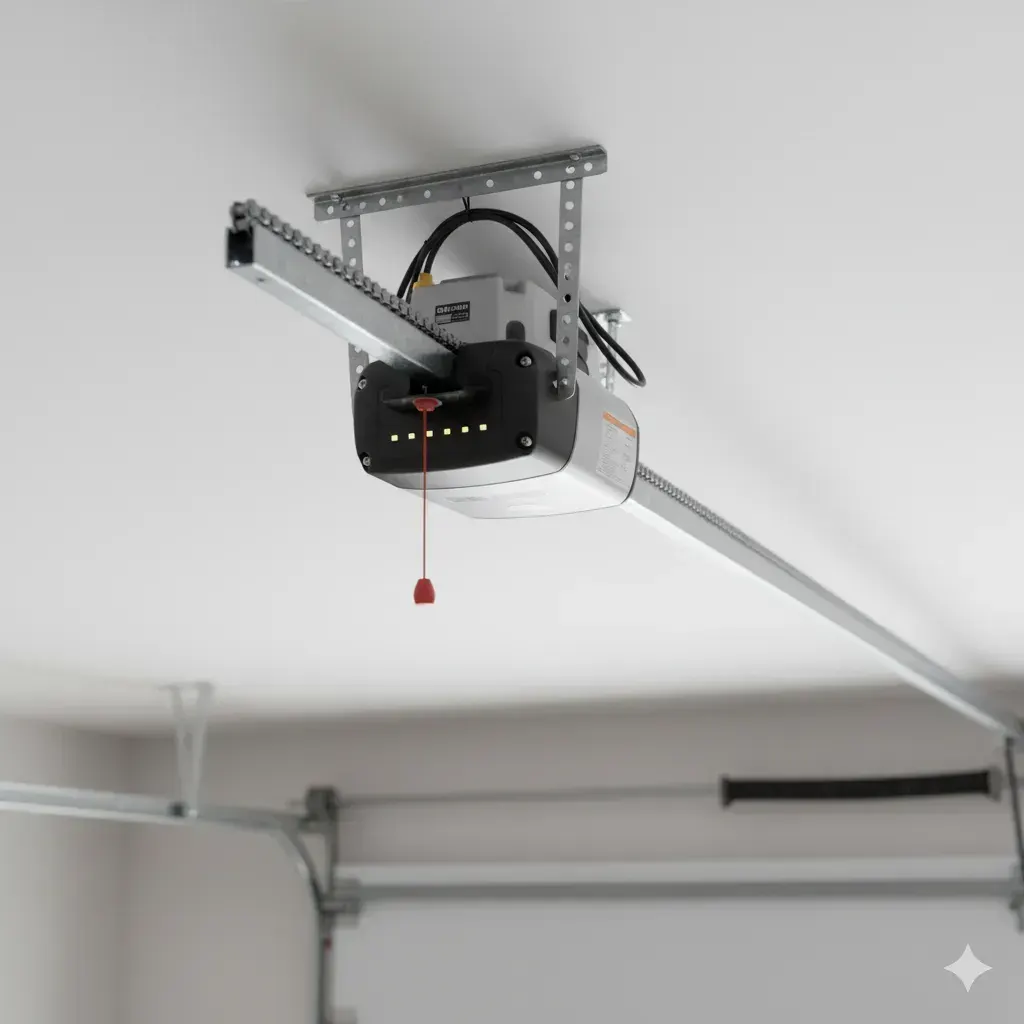
Emergency Garage Door Repair
Emergency garage door repair in Worcester, MA for doors that will not open, will not close, or are stuck open. Call now
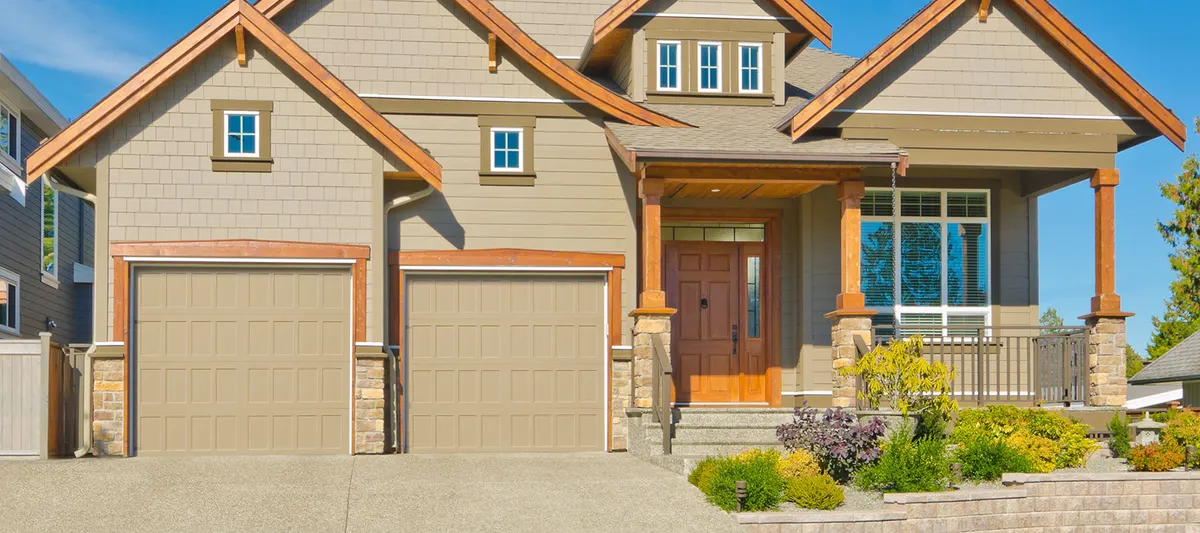
Garage Door Spring Replacement
Garage door spring replacement in Worcester, MA for torsion and extension springs. Matched springs, rebalancing, and ful
Torsion Spring Repair
Torsion spring repair in Worcester, MA for the coil spring above the door. Matched springs, correct winding, and a rebal
Garage Door Cable Replacement
Garage door cable replacement in Worcester, MA for snapped, frayed or slipped lift cables. The door is rebalanced and te
Frequently asked questions
Leave the door where it is, keep people clear of its path, and do not run the opener or try to lift the door by hand. If the door is stuck open, lock the door from the garage into the house. Then call — the visit starts with making the door safe.
No. Without the spring, the door weighs its full weight, and the opener cannot lift it safely. Running the opener can strip the drive gear and burn out the motor, and lifting by hand risks the door dropping.
Yes, on a two-spring door. The surviving spring has the same age, the same cycles and the same rust exposure as the one that broke, so it is likely to break soon after. Replacing both means one visit and a balanced door.
Cold contracts the steel and thickens the lubricant, raising the tension in a spring that was already near the end of its cycle life. The first hard freeze of the season is the most common time for a spring to snap in Worcester.
Call now for garage door repair in Worcester, MA
Describe the door and the symptoms, and the visit will confirm what the door needs before any work starts.
Call NowContact
Call to describe the door and the symptoms, and the visit will confirm what the door needs before any work starts. Hours: Monday to Friday 7:00 AM to 10:00 PM ET, Saturday 8:00 AM to 10:00 PM ET, Sunday 7:00 AM to 9:00 PM ET.
hello@worcestergaragedoorpros.com · Serving Worcester and Worcester County, Massachusetts.
Call Now