Torsion vs Extension Springs: Which Is on Your Garage Door?
Every garage door has springs, and they come in two types: torsion springs, coiled above the door, and extension springs, stretched along the tracks. The type decides how the door is repaired, how long the springs last, and what the safety risks are. This guide explains both, how to tell which one you have, and which suits which door.
Hours: Mon–Fri 7:00 AM–10:00 PM ET · Sat 8:00 AM–10:00 PM ET · Sun 7:00 AM–9:00 PM ET
Call now for garage door repair
Describe the door and the symptoms, and the visit will confirm what the door needs before any work starts.
Call NowServing Worcester and Worcester County, Massachusetts.
In short
Torsion springs are coils on a shaft above the door that wind and unwind as the door moves; extension springs run along the horizontal tracks and stretch as the door closes. Most modern doors use torsion springs, which last longer and are smoother; many older Worcester garages use extension springs, which must have a safety cable through the centre.
How to tell which springs your door has
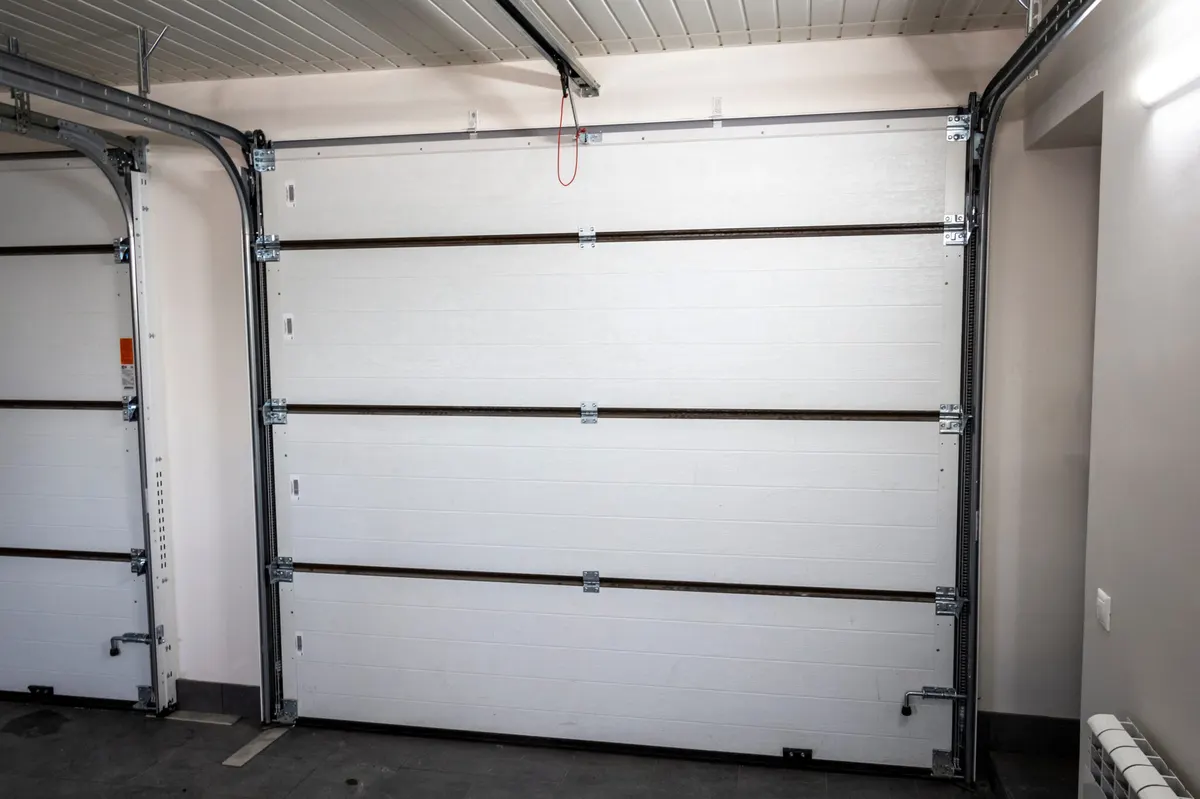
Stand inside the garage and look. If there is a heavy coil mounted on a metal shaft directly above the door opening, the door uses torsion springs — one coil on a single door, usually two on a double door. If there are springs running along the horizontal tracks on either side of the door, stretching as the door closes, the door uses extension springs. The distinction matters because the parts, the tools and the safety steps are different for each, and a repair visit needs to know which system it is dealing with before it arrives. The age of the door is a clue too: torsion springs are the standard on modern doors, while extension springs are common on older doors and lighter single doors, including many in Worcester's older garages.
Torsion springs: how they work and why they last
A torsion spring winds up as the door closes and unwinds as it opens, carrying most of the door's weight through a shaft and cable drums. The system is compact, the spring is contained on its shaft, and the motion is smooth — the door lifts evenly and lowers gently. Torsion springs are rated by cycle life, commonly around 10,000 cycles, and they generally last longer than extension springs because the coil is wound and unwound evenly rather than stretched. The failure is dramatic — a loud bang when the coil snaps — but it is also contained: the broken spring stays on its shaft. The repair is a replacement matched to the door's weight and height, wound to the correct number of turns, with the door rebalanced by hand afterwards.
Extension springs: how they work and the safety cable
Extension springs stretch as the door closes and contract as it opens, pulling on a pulley and cable system that lifts the door. The system is simpler and was the standard on lighter doors for decades, but it has a risk that torsion springs do not: a snapped extension spring can fly across the garage. That is why every extension spring must have a safety cable running through its centre, anchored at both ends, to contain it if it breaks. Many older Worcester doors are missing this cable, or have one that has rusted through, and the repair visit should fit or replace it. Extension springs also wear unevenly: one side can stretch more than the other, and the door lifts crooked. They are replaced as a matched pair, like torsion springs, and the pulleys and tracks are checked at the same time.
Which is better, and can you switch?
For most doors, torsion springs are the better system: they last longer, they run smoother, they are contained when they break, and they are easier to balance precisely. But the choice is not always open to you: a door with very little headroom above the opening may not have room for a torsion shaft, and a light single door that has run on extension springs for decades may not need the change. Switching from extension to torsion springs is possible, and it is sometimes done when a door is replaced or when the extension system has failed repeatedly — but it is a conversion, not a simple part swap, because the shaft, drums and brackets are different. The decision should follow the door: its weight, its headroom, its age, and how it is used. A door that is happy on extension springs, with safety cables in place and springs replaced as a pair, does not need converting; a door that keeps breaking extension springs, or a new door going into a garage with the headroom for it, is a candidate for torsion.
Maintenance differences between the two systems
The maintenance for torsion and extension springs differs in the details, and the difference matters. A torsion spring needs lubrication on its coils a few times a year, a visual check for rust and gaps, and a balance test — and the spring is contained on its shaft, so the check is a look at one coil above the door. An extension spring needs the same lubrication and the same balance test, but it also needs a check of the safety cable — the cable through the centre of each spring, anchored at both ends — because the cable is the part that protects the household if the spring snaps, and many older doors are missing it. The pulleys need attention too: a worn pulley makes the spring work harder and wear faster, and the pulley is a part that torsion systems do not have. The tracks need a look on both systems, but for different reasons: on a torsion door, the tracks carry a door that is balanced by the springs above it; on an extension door, the tracks carry the springs themselves, and a track that is bent or dirty wears the springs faster. The rhythm is the same — twice a year, before winter most of all — but the checklist differs, and a household that knows which system it has can check the right parts.
Related services and guides
Torsion Spring Repair
Torsion spring repair in Worcester, MA for the coil spring above the door. Matched springs, correct winding, and a rebal
Extension Spring Repair
Extension spring repair in Worcester, MA for the springs along the door tracks. Matched pairs, safety cables checked, an
Broken Garage Door Spring Repair
Broken garage door spring repair in Worcester, MA. Learn the signs of a snapped torsion or extension spring, why the doo
Garage Door Spring Replacement
Garage door spring replacement in Worcester, MA for torsion and extension springs. Matched springs, rebalancing, and ful
How Long Do Garage Door Springs Last?
How long do garage door springs last in Worcester, MA? Cycle ratings, what shortens a spring's life, and the signs yours
Frequently asked questions
Look inside the garage: a heavy coil on a shaft above the door means torsion springs; springs running along the horizontal tracks on either side mean extension springs. Most modern doors use torsion; many older Worcester garages use extension.
Torsion springs generally last longer, because the coil is wound and unwound evenly rather than stretched. Both are commonly rated around 10,000 cycles, but extension springs wear unevenly and are more affected by rust and imbalance.
Yes. A safety cable must run through the centre of each extension spring, anchored at both ends, so the spring is contained if it snaps. Many older doors are missing this cable, and the repair visit should fit one.
It is possible, but it is a conversion, not a part swap — the shaft, drums and brackets are different. It makes sense when a door is replaced or when the extension system keeps failing, and when the garage has the headroom for a torsion shaft.
Call now for garage door repair in Worcester, MA
Describe the door and the symptoms, and the visit will confirm what the door needs before any work starts.
Call NowContact
Call to describe the door and the symptoms, and the visit will confirm what the door needs before any work starts. Hours: Monday to Friday 7:00 AM to 10:00 PM ET, Saturday 8:00 AM to 10:00 PM ET, Sunday 7:00 AM to 9:00 PM ET.
hello@worcestergaragedoorpros.com · Serving Worcester and Worcester County, Massachusetts.
Call Now