When To Replace a Garage Door Opener
A garage door opener can last fifteen years or more, but it does not last forever — and the decision between repair and replacement turns on four things: the opener's age, its safety features, whether its parts are still made, and how often it has failed. This guide explains each one.
Hours: Mon–Fri 7:00 AM–10:00 PM ET · Sat 8:00 AM–10:00 PM ET · Sun 7:00 AM–9:00 PM ET
Call now for garage door repair
Describe the door and the symptoms, and the visit will confirm what the door needs before any work starts.
Call NowServing Worcester and Worcester County, Massachusetts.
In short
Replace a garage door opener when it was made before 1993 and has no safety sensors, when its parts are no longer made, when it has failed repeatedly, or when it has been straining against a weakening spring for years. Repair makes sense when the opener is otherwise sound and the failed part is a wear item such as a gear, a capacitor or a sensor.
Age and safety: the 1993 line
The clearest line is 1993, the year photoelectric safety sensors became required on residential openers. An opener made before 1993 has no sensors: it cannot detect a person, a pet or a car in the doorway, and it will close on an obstruction unless its mechanical reverse catches it. No repair makes it safe by modern standards, and it should be replaced with an opener that has sensors, a safety reverse, and modern rolling-code security. An opener made after 1993 but over fifteen years old is a different question: it has the safety features, but its parts may no longer be made, and its motor and gear have fifteen years of wear behind them. The age alone does not decide it — a fifteen-year-old opener that has been maintained and has never strained against a weak spring can keep working — but the age sets the context for the other three factors.
Parts and failure history
The second factor is parts: on an opener over fifteen years old, the circuit board is often no longer made, and a failed board means a replacement opener, not a repair. The third factor is failure history: an opener that has failed more than once in a short period, or that has needed a gear kit and then a capacitor and then a sensor, is an opener whose parts are wearing out together, and the next failure is a matter of time. The fourth factor is the door it has been working against: an opener that spent years straining against a weakening spring will have a worn drive gear and a tired motor, and replacing the springs without checking the opener leaves a tired opener on a fresh door. The visit should test the opener under load, not just run it once on a balanced door, because an opener that looks fine on a balanced door can fail under the load of a real one.
What a new opener brings
A replacement opener brings more than a new motor. It brings quieter operation — a belt-drive opener is the quiet choice for a garage under a bedroom — and modern rolling-code security, so a captured code cannot be reused. It brings a battery backup for power outages, so the door can open when the power is out. And it brings a safety system that is tested as part of the installation: sensors aligned, travel and force limits set for the door, and the safety reverse tested. The installation should end with the opener's limits set for the door, the force set to the minimum that moves it reliably, and the remote, keypad and wall button all working. A new opener on a new door is a system; a new opener on a tired door is a new part on an old problem, and the visit should say so.
The remote and keypad after a replacement
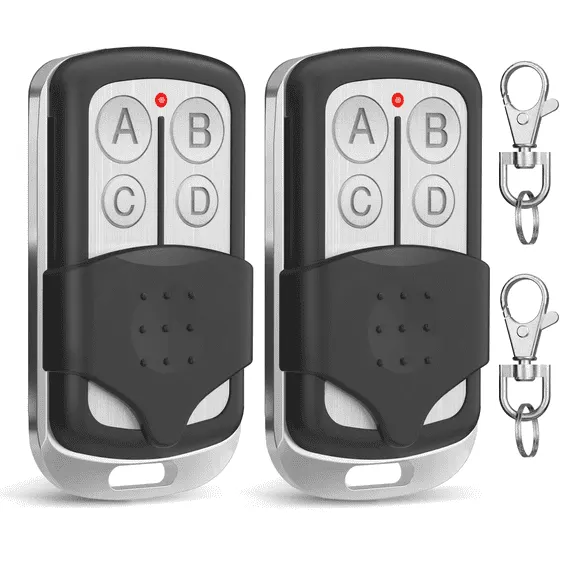
A replacement opener means new controls, and the household should expect to set them up again. The remotes that worked with the old opener will not work with the new one — the new opener uses a different rolling code, and each remote must be programmed to it by pressing the learn button on the opener and the remote button in order. The keypad must be programmed too, and the code should be chosen fresh: not a birthday or an address, and not the code that was shared with a contractor or a former tenant. The old remotes should be cleared from the new opener's memory before the new ones are programmed, so that only the remotes the household still holds can open the door. And the wall button — the simplest control of all — should be tested, because a household that can only open the door from the remote has a problem even if the opener is new. The visit should leave the household with every control working — wall button, each remote, and the keypad — and with the code written down somewhere safe, not on the keypad itself. A new opener is not installed until its controls are, and the household knows how to use them.
Related services and guides
Garage Door Opener Repair
Garage door opener repair in Worcester, MA for openers that hum, click, reverse, or stop responding. Diagnosis at the mo
Garage Door Installation
Garage door installation in Worcester, MA for new and replacement doors. Sizing, insulation, opener pairing and full saf
Garage Door Sensor Repair
Garage door sensor repair in Worcester, MA for safety sensors that stop the door from closing. Alignment, wiring and ope
Garage Door Keypad & Remote Repair
Garage door keypad and remote repair in Worcester, MA for remotes that stop working, keypads that will not respond, and
Repair vs Replace a Garage Door
Repair vs replace a garage door in Worcester, MA. How the decision is made — the door's age, how many parts are failing,
Frequently asked questions
A well-maintained opener can last fifteen years or more. The life depends on how often it runs, whether it has been working against a weakening spring, and whether its parts are still made when something fails.
Repair makes sense when the opener is otherwise sound and the failed part is a wear item such as a gear, a capacitor or a sensor. Replace it when it was made before 1993, when its parts are no longer made, or when it has failed repeatedly.
If it was made before 1993 it has no photoelectric safety sensors, and it should be replaced. If it was made after 1993, check that both sensors show a steady light and that the door reverses on contact — if either fails, the opener needs attention.
It depends on the door and the house. A belt-drive opener is the quiet choice for a garage under a bedroom; a chain-drive opener is the strong, simple choice for a heavy insulated double door. The opener should be sized to the door's weight and use.
Call now for garage door repair in Worcester, MA
Describe the door and the symptoms, and the visit will confirm what the door needs before any work starts.
Call NowContact
Call to describe the door and the symptoms, and the visit will confirm what the door needs before any work starts. Hours: Monday to Friday 7:00 AM to 10:00 PM ET, Saturday 8:00 AM to 10:00 PM ET, Sunday 7:00 AM to 9:00 PM ET.
hello@worcestergaragedoorpros.com · Serving Worcester and Worcester County, Massachusetts.
Call Now